At the bay
Short, over, damaged and unexpected
The four flags, exactly what each one means, and when the software applies it.
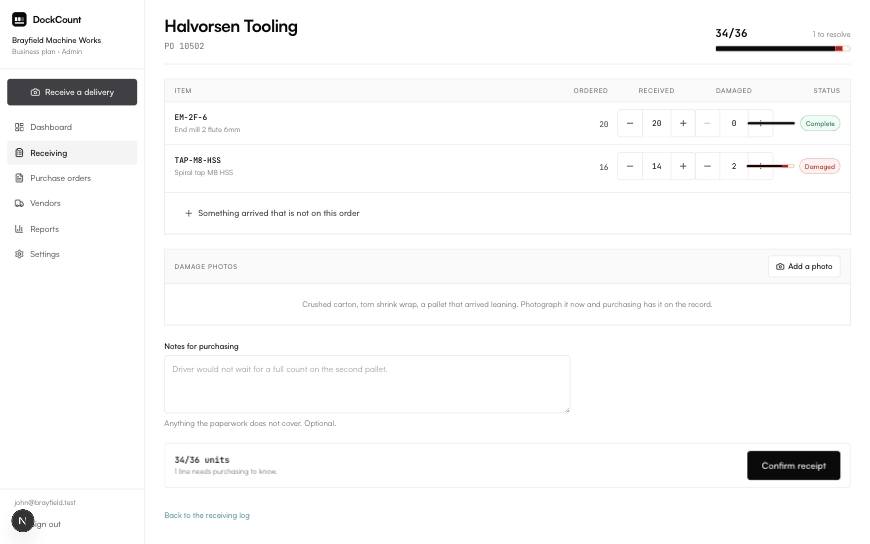
Every line on a delivery ends up with one of five labels. You do not choose them: they follow from the numbers you enter, so two people recording the same pallet get the same answer.
Exactly what was still outstanding arrived, and none of it is damaged. Nothing for you to do.
Fewer arrived than the order was still waiting for. Worth mentioning to the driver before they go.
More arrived than the order was waiting for. Check you have not been sent somebody else's pallet.
Some of what arrived is not usable. Photograph it. Damage outranks the other labels, because a crushed carton matters more than the count.
Something turned up that this order never asked for. Record it anyway so purchasing can see it.
Put another way
Ordering a dozen eggs. Ten arrive: short. Fourteen arrive: over. Twelve arrive and one is cracked: damaged, because that is the thing you would actually ring up about. A bag of flour you never ordered: not on the PO.
Outstanding, not ordered
The comparison is against what the order still has outstanding, not the original quantity. On a part-delivered order this matters: if you ordered fifty, forty came last week and ten come today, today is complete rather than short.
Worth knowing
So do not be alarmed when a second delivery against the same order shows every line as complete. You are seeing what is left to come, not the original order all over again.
Damage is counted separately
Damaged quantities are their own number rather than a deduction. Ten arrived and two are crushed is recorded as ten arrived, two damaged. Purchasing needs both figures: one to argue with the supplier, one to know what is actually usable.
Did this page miss something?
If you came here with a question and left without the answer, that is a fault in the page rather than in the question. Tell us what you were trying to do and we will write it up, usually the same week.