Shipping and receiving software
Two jobs share a name. Most software does one of them.
Shipping is goods leaving: pick, pack, label, rate, track. Receiving is goods arriving: check what turned up against what was ordered, record the condition, and produce something accounts can put an invoice next to. They share a department and almost nothing else.
DockCount does the second one, and only the second one. If the half costing you money is the inbound half, this page is about your problem.
Worth knowing who is telling you this. We make DockCount, and it does the inbound half and nothing else, so the outbound sections below are a description of what other tools are for.
Which half is actually costing you
Outbound
Shipping
The work is throughput and cost per parcel. Rate shopping across carriers, printing labels fast, batching, tracking numbers back to orders, and telling a customer where their thing is.
If this is your problem, buy shipping software. ShipStation and its competitors do this properly and we do not do it at all.
Inbound
Receiving
The work is evidence. Did the right thing arrive, in the right quantity, undamaged, against the order you placed, and can you show it three weeks later when the invoice does not match.
This is what DockCount does. Nothing else.
Why inbound is the half that quietly loses money
A shipping mistake is loud. The customer phones. Somebody notices the same week and it gets fixed, because there is a person on the other end who cares about it.
A receiving mistake is silent. A delivery comes up short, the line gets closed at the ordered quantity to keep the system tidy, and the invoice for the full amount matches perfectly and gets paid. Nothing downstream can detect it: the only record that would have disagreed is the one somebody adjusted to agree.
That is why the two halves need different software. Shipping software optimises a process somebody is already watching. Receiving software produces evidence nobody is watching for, until the moment they need it.
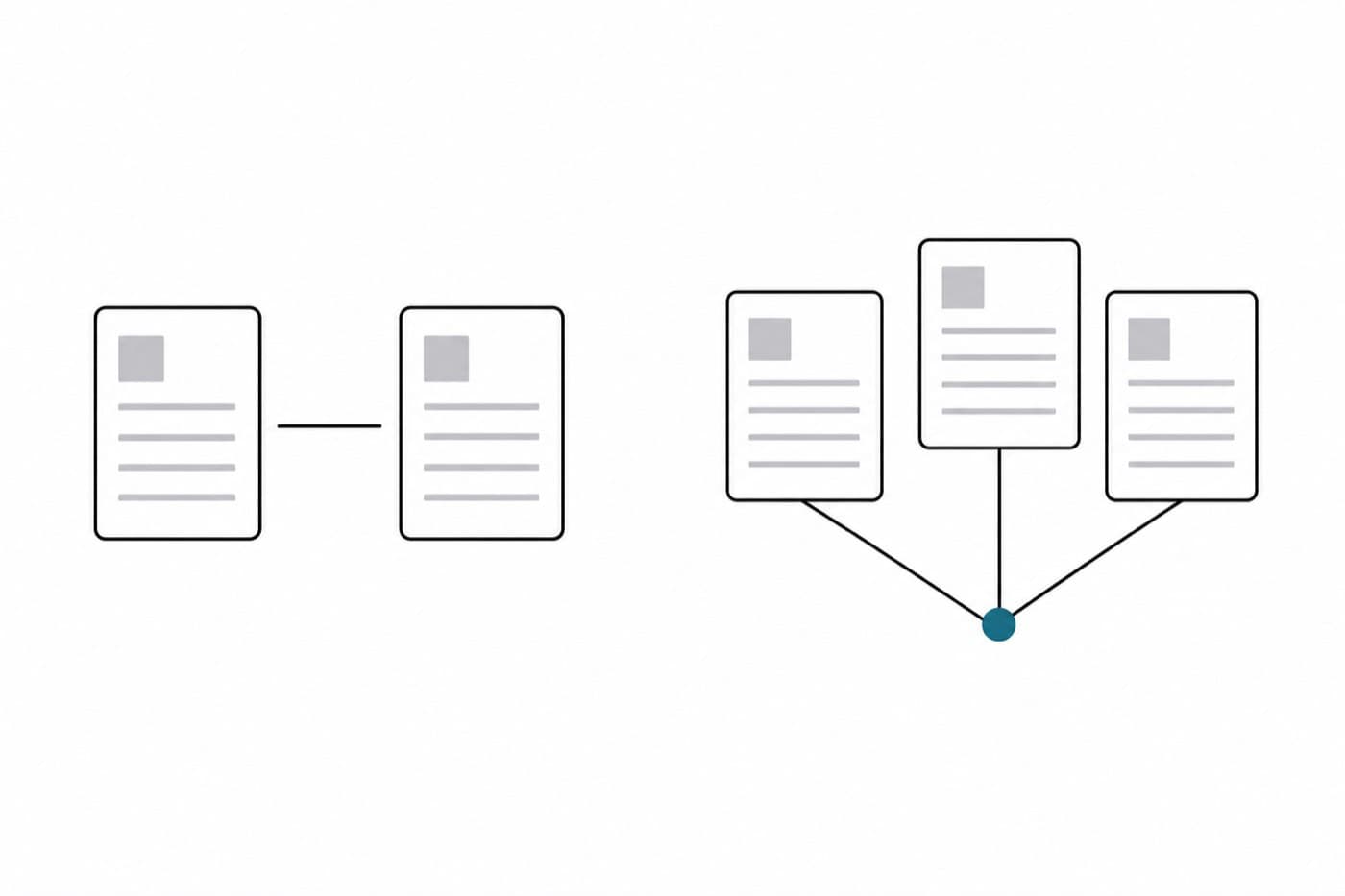
An invoice checked against the order alone cannot tell you the goods arrived. The third document is the one small companies do not have.
What receiving software has to do
Four things. Anything that misses one of them is a log, not a check.
Hold the purchase order
Recording what arrived without comparing it to what was ordered tells you nothing you did not already know. The comparison is the entire point.
Work one-handed at the pallet
Receiving does not happen at a desk. Anything needing a keyboard gets done later from memory, and a record written at five o'clock always says everything was fine.
Attach the evidence to the line
Photographs of damage belong on the line they describe, not in somebody's camera roll and not on the delivery as a whole.
Tell whoever can act, unprompted
The gap between the bay and the person who can chase a supplier is where the cost lives. If somebody has to remember to send an email, it will not be sent.
What DockCount is not
No label printing, no carrier rates, no tracking numbers, no stock levels, no picking, no slotting, no bin locations. It is not a warehouse management system and it is not the shipping half of this category. If you searched for shipping software, this is the wrong product and you should not waste an afternoon finding that out: the honest comparison of the four options includes the cases where the right answer is to buy nothing at all.
Questions
- What is shipping and receiving software?
- An umbrella term for two different jobs. Shipping software handles goods leaving: picking, packing, labels, carrier rates and tracking. Receiving software handles goods arriving: checking a delivery against the purchase order it was placed on, recording quantities and condition, and producing a record accounts can match an invoice against. Most products do one of these well and the other as an afterthought.
- Do I need both?
- Only if you both send and take deliveries at volume. A manufacturer or job shop that buys materials and ships finished work occasionally usually has a receiving problem and a light shipping one. A distributor or e-commerce seller is usually the reverse. Buying a combined product because the category name has both words in it is how companies end up paying for half a tool they never open.
- Is shipping and receiving software the same as a WMS?
- No. A warehouse management system adds slotting, bin locations, wave picking, cycle counting and labour management. Those solve problems a warehouse of fifty people has. A company taking five to fifty deliveries a week does not have them, and a WMS bought to solve receiving is an implementation project attached to a feature you needed.
- What does receiving software cost?
- For small operations, typically nothing to a few hundred dollars a month. Anything quoting an implementation fee before a demo is selling you a WMS. DockCount is free for 25 deliveries a month and $29 to $149 after that, with no setup fee and no call required.
- Can I just use a spreadsheet?
- For a while, genuinely yes. A shared spreadsheet works until somebody has to answer a question about a delivery from four months ago, or until two people start keeping separate copies. The failure is not volume, it is that rows get typed from memory at the end of the day and nothing timestamps itself.
Before you buy anything
These are free, on the page, and need no account. If they solve it, you have saved yourself a subscription.
Put in one purchase order you are expecting and receive against it on the next delivery. That is enough to know whether the inbound half is worth software.