Receiving report
The one document in the chain that you write yourself.
The purchase order is what you asked for. The packing slip is what the supplier says they sent. The invoice is what they want paying. The receiving report is the only one of the four written by the person who actually looked in the box, which is why it settles arguments the other three cannot.
First, you are probably not missing a document
People arrive here because an auditor, a customer or a template asked for a “receiving report” and their warehouse produces something with a different name on it. Almost always, they already have the document.
| Name | Written by | Where you hear it |
|---|---|---|
| Receiving report | The buyer | US accounting, accounts payable, government contracting |
| Goods received note (GRN) | The buyer | Warehousing, British and Commonwealth usage |
| Goods receipt | The buyer | ERP systems, particularly SAP |
| Packing slip | The supplier | US shipping |
| Delivery note | The supplier | British and Commonwealth usage |
The first three are the same document. The last two are the same document as each other, and a different one entirely: written by the other party, describing their intention rather than your observation.

Four documents follow an order. Only one of them is written by somebody who saw the goods.
What has to be on it
Four things carry the weight. Everything else on the form is convenience.
What was ordered
The purchase order number and the ordered quantity, taken from your order rather than from the supplier's paperwork. If both numbers came from the same place, the document proves nothing.
What was received
Your count. Not the packing slip figure, and not the packing slip figure with a tick next to it.
What condition it was in
The field people skip and the one that decides whether a claim survives. Written at the bay it is evidence; recalled three weeks later it is an opinion.
Who says so
A named person, not a department. It is the first thing an auditor looks for and the thing that stops a dispute becoming a conversation about which of four people might have signed.
A printable one
Free, on the page, no email address. Print it or copy the columns into a spreadsheet.
Receiving report
One per delivery. File it against the purchase order.
Report no.
Date and time received
Supplier
Purchase order no.
Carrier
Packing slip / delivery note no.
Received at (site, dock)
Cartons or pallets received
| Item / SKU | Description | Qty ordered | Qty received | Condition | Variance |
|---|---|---|---|---|---|
Damage or shortage noted on the carrier's paperwork? (Y/N)
Received and checked by (print name)
Signature
Notes and exceptions
Why accounts payable cares about a warehouse document
Because it is the only leg of three-way matching that describes reality. An invoice checked against a purchase order confirms that the right goods were ordered at the right price. It cannot confirm they arrived, and it will pass happily on a delivery that came up six units short.
That is not an exotic failure. It is the ordinary one, and it is usually well intentioned: the line gets closed at the ordered quantity to keep a system tidy, the invoice then matches perfectly, and every downstream control passes. The only record that would have disagreed is the one somebody adjusted to agree.
Which is why the receiving report has to be allowed to disagree with the order. If your system makes a partial receipt harder to enter than a full one, that is not a preference. It is a defect, and it has a cost.
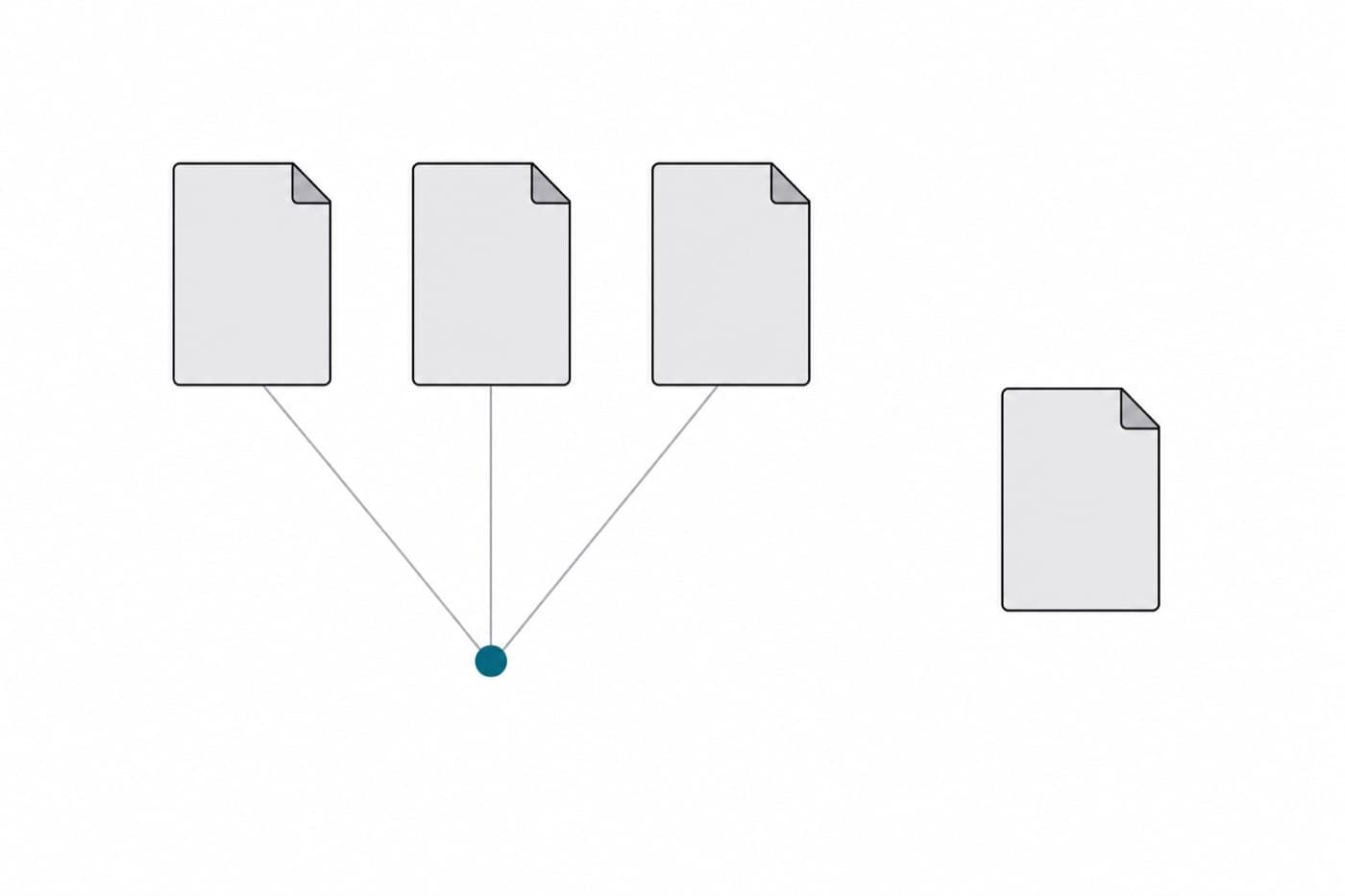
Three documents have to agree before an invoice is paid. The supplier writes two of them.
The four mistakes
| Doing this | Costs you |
|---|---|
| Copying quantities from the packing slip | The entire check. You have confirmed the supplier's number using the supplier's number. |
| Writing it up at the end of the day | Accuracy, invisibly. A record made from memory says everything was fine, because that is what the end of a day feels like. |
| Closing the line at the ordered quantity to keep the system tidy | The money. The invoice now matches and gets paid in full for goods that did not arrive. |
| Recording a quantity but no condition | Any damage claim. A count without a condition cannot support one. |
Questions
- What is a receiving report?
- A document created by the buyer recording what physically arrived from a supplier: date and time, supplier, purchase order number, item, quantity received, condition, and who checked it. It is written by the receiving side, which is what distinguishes it from a packing slip, and it is the document accounts payable uses to release an invoice for payment.
- Is a receiving report the same as a goods received note?
- In practice, yes. Receiving report is the more common term in US accounting and government contracting; goods received note, or GRN, is more common in warehousing and in British and Commonwealth usage. Both name the same thing: the buyer's own record of what turned up. If your auditor asks for one and your warehouse calls it the other, you are not missing a document.
- What is the difference between a receiving report and a packing slip?
- Authorship, and it is the whole point. A packing slip is written by the supplier and states what they believe they sent. A receiving report is written by you and states what actually arrived. Copying one onto the other destroys the only check the pair provides, and it is the most common way a short delivery gets paid for in full.
- Who prepares the receiving report?
- Whoever physically takes the delivery, at the time they take it. Not purchasing, who ordered it, and not accounts, who will pay for it: the separation is the control. A report written later from somebody's recollection is a reconstruction, and reconstructions say everything was fine.
- How long should receiving reports be kept?
- At least as long as the records they support. For US federal tax the general period of limitations is three years from filing and six where income is substantially understated, but contract limitation periods often run longer, which is why most small manufacturers settle on seven years for anything supporting a payment.
- Does a receiving report need to be signed?
- It needs a named person, which is the substance of what a signature provides. An auditor tracing an invoice wants to know who says these goods arrived, and a department name does not answer that. Whether the name is handwritten or recorded by a system that knows who was logged in matters much less than whether there is a name at all.
Related
DockCount produces this record as a by-product of counting the delivery, which is the only way it reliably exists. Written by Hamza Rivera.