For owners and finance
You are checking the invoice against the wrong document.
An invoice gets checked against the purchase order: right goods, right price. That check cannot tell you whether the goods arrived. When a delivery comes up short and nobody wrote it down at the time, the invoice matches perfectly and gets paid in full, and every control you have passes on the way through.
25 deliveries a month free, no expiry, nothing to cancel.
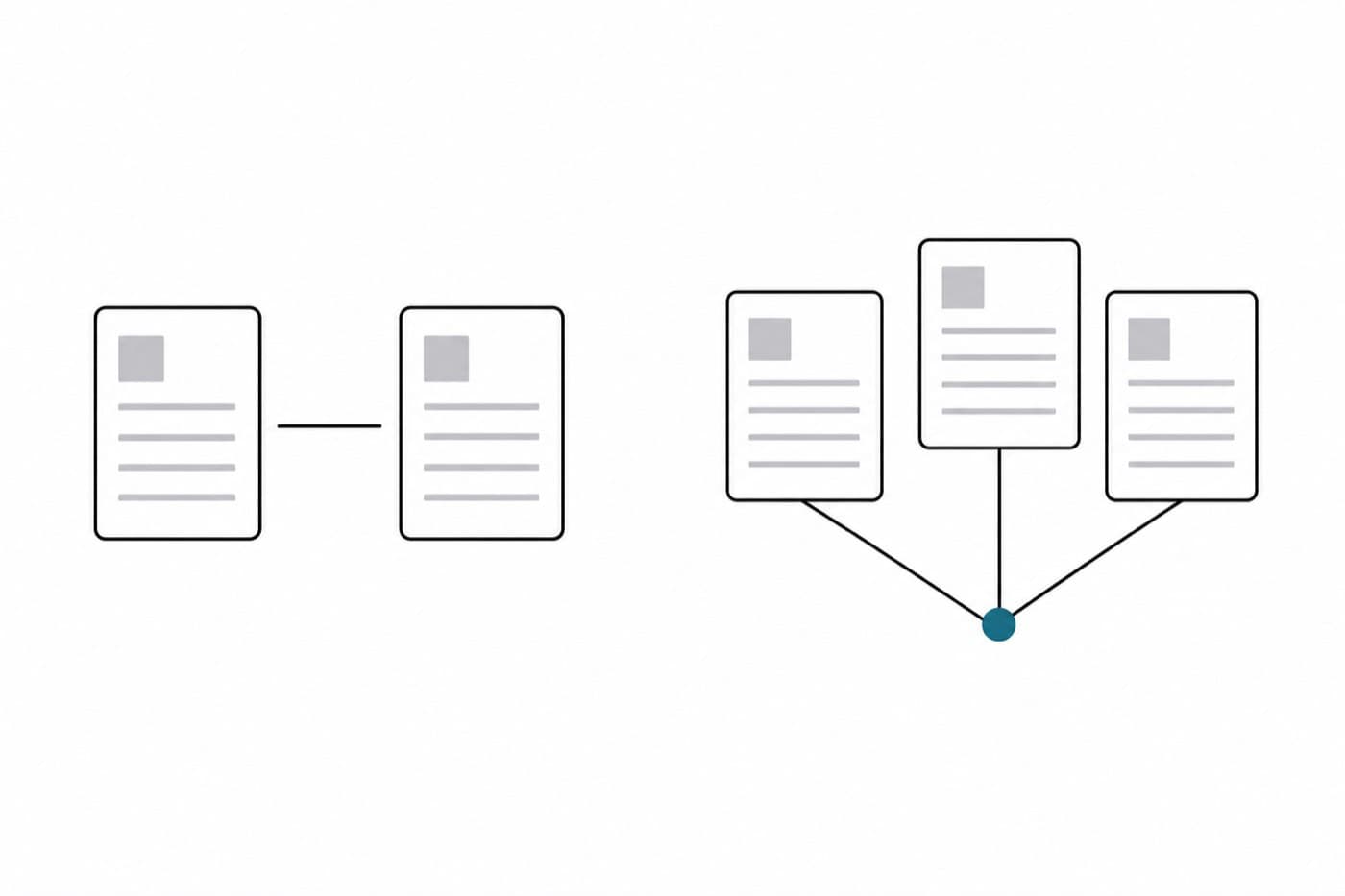
Two documents can agree with each other perfectly while describing goods that never turned up.
Where the money actually goes
Paid in full for a short delivery
The line gets closed at the ordered quantity to keep the system tidy, the invoice matches, and nothing downstream can ever detect it. This is the expensive one and it is always well intentioned.
A claim that fails for want of a photograph
Damage found after the pallet has been broken down, with a clean signature on the carrier's paperwork. The goods were damaged in transit. You just cannot show it any more.
A supplier who is quietly always light
Four short deliveries in a quarter is a pattern worth real money at a price negotiation. It is only worth anything if somebody recorded them as they happened.
The fix is a document, not a process change
Nobody at the bay needs to work differently for this to be solved. They already count the delivery. What is missing is that the count becomes a record without anybody having to sit down afterwards and write one, because the step that happens later, under time pressure, by somebody with another job to do, is the step that does not happen.
DockCount makes the record fall out of the counting. The receiver picks the order on a phone, counts, photographs anything wrong, and confirms. That confirmation is the record: what was ordered, what arrived, what condition it was in, who checked it and when. Purchasing gets it the same day, and accounts can put an invoice next to it weeks later.
That is the missing leg of three-way matching, and producing it reliably is the whole product.
What it is not
Not inventory management, and not a warehouse management system. It does not hold stock levels, reorder, pick or slot. If those are the problem, this is the wrong tool and a bigger one is the right answer: the honest comparison, including the cases where you should buy nothing at all, is in choosing receiving software.
Questions
- How does a company pay for goods it never received?
- The invoice matches the purchase order, so it clears. Nothing in that check involves what physically arrived. If a delivery came up short and the receiving record was either never written or quietly adjusted to match the order, every downstream control passes and the payment goes out in full. It is almost never fraud; it is usually somebody being tidy under time pressure.
- Is this not what three-way matching is for?
- Yes, and most small companies only do two-way matching without calling it that. Three-way adds the receiving record: proof of what turned up. That leg is the hard one to produce, which is why it gets skipped, and it is the only one that can catch being billed for goods that never arrived.
- Our receivers already write it down. Is that not enough?
- It depends when they write it. A record made at the pallet is an observation. One written up at the end of the day is a reconstruction, and reconstructions say everything was fine, because that is what the end of a day feels like. The gap between the delivery and the record is the single best predictor of whether the record can be relied on.
- What does it take to change?
- Less than people expect, and it is not really a software question. Counting against the order rather than the packing slip, and photographing anything wrong before the pallet is broken down, cover most of it. Both are free. What software adds is that the record then exists without anybody having to remember a separate step.
Put one order in and receive against it on the next delivery. That is enough to see whether the record it produces is the one you have been missing.