Choosing receiving software when you are too small for a WMS
An honest look at the four options a ten to fifty person manufacturer actually has, what each one costs in practice, and the point at which a spreadsheet stops being the right answer.
In short
- If you already pay for an inventory or ERP system, use its receiving module before buying anything. Most companies own one and never switched it on.
- A spreadsheet stops working at the point where somebody has to answer a question about a delivery from four months ago, not at some volume of deliveries.
- A full WMS solves a problem, slotting, picking, labour management, that a fifteen person shop does not have. Buying one for receiving alone is paying for a warehouse you do not run.
Four options, what each one costs in practice, and the cases where the right answer is to buy nothing at all. Worth knowing before you read it that this site is run by the maker of one tool in the fourth category, which is why that category is described with its limits rather than its pitch.
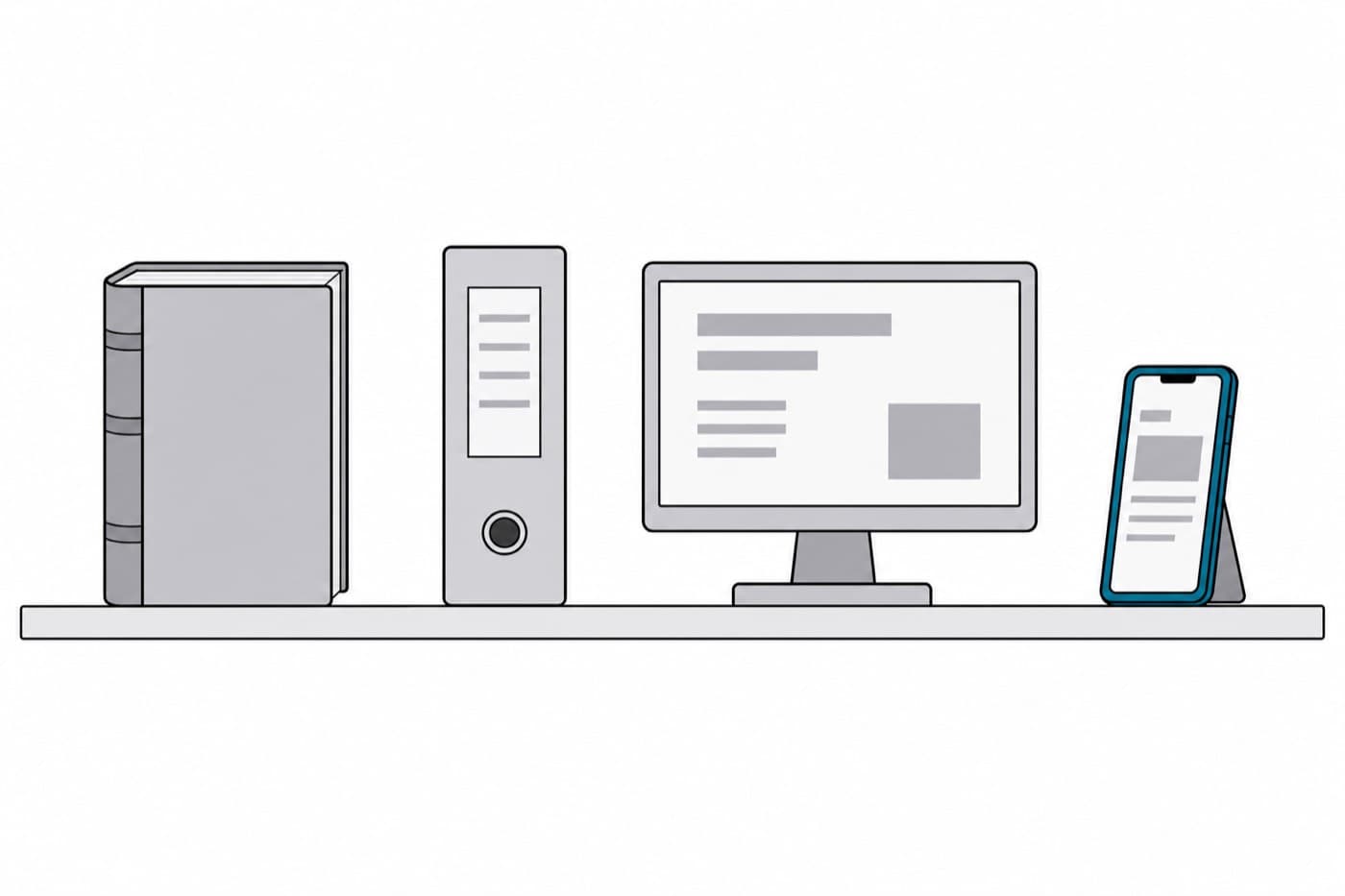
The four options
| Option | Works when | Falls over when |
|---|---|---|
| Paper book by the door | A handful of deliveries a week, one person taking all of them, nobody ever asks about last quarter. | Somebody has to find a specific delivery from months ago, or two people start keeping their own book. |
| Shared spreadsheet | You want filtering and a shared copy, and the person filling it in is disciplined about doing it at the bay. | Rows get typed from memory at the end of the day, nothing timestamps itself, and photographs live in a phone with no link to the row. |
| The receiving module in an ERP or inventory system you already own | You already pay for it and it already holds your purchase orders. This is the cheapest good answer and it is very often available. | It was designed for a desk, so it does not work with one hand at a pallet, and staff go back to paper within a month. |
| A dedicated receiving tool | Purchase order matching and condition evidence are the actual problem, and it has to work on a phone at the bay. | You need slotting, picking, wave planning or labour management. That is a WMS, and this is not one. |
The question that decides it
Not how many deliveries you take. It is this: when an invoice arrives that does not match the order, how long does it take you to find out what actually turned up, and does the answer depend on one particular person being in that day. If the answer is minutes and it does not depend on a person, whatever you are doing works. If it is an afternoon, or it depends on Dave, the cost is already being paid: it is just not on an invoice.
What to look for, in the order it matters
- 1It has to work one-handed on a phone, standing up. Receiving does not happen at a desk. Anything requiring a keyboard gets done later from memory, and later from memory is the failure mode you are trying to buy your way out of.
- 2It has to hold your purchase orders. Recording what arrived without comparing it to what was ordered is a log, not a check. The comparison is the point.
- 3Photographs have to attach to the line. Not to the delivery, and certainly not to somebody’s camera roll.
- 4It has to tell purchasing without anybody remembering to. The gap between the bay and the person who can act is where the cost lives.
- 5You have to be able to get your data out. Ask before you buy. An export you can run yourself, in a format something else can read, is the difference between a supplier and a hostage situation.
- 6It has to be cheap enough to abandon. Under about fifty dollars a month, a wrong decision costs you a month. Over about five hundred with an implementation fee, a wrong decision costs you a year of pretending it was right.
When the answer is do not buy anything
- You take four deliveries a week from two suppliers you have used for a decade, and no invoice has been wrong in two years. Buy nothing. Print the log and carry on.
- You already pay for an inventory system with a receiving module you have never opened. Open it first. If it works on a phone, you are done.
- The real problem is that one person does all the receiving and nobody else knows how. That is a training and cover problem, and software will document it rather than fix it.
Worth knowing
Be careful with any tool that requires an integration project before it does anything useful. For a company this size the integration is usually the whole cost, and it is spent before you know whether the tool suits the people who have to use it. Prefer something you can try on one delivery this afternoon.
DockCount does this job on a phone at the bay: count a delivery against the order it was placed on, photograph anything wrong, and the record writes itself. receiving software for a small business.