How much of a delivery should you actually inspect?
Checking everything is impossible and checking nothing is negligent. Sampling plans are the formal answer, and there is a simpler version that works for most small operations.
In short
- The choice is not between checking everything and trusting everything. It is between a defined rule and an undefined one.
- A sampling plan is mostly useful because it is written down. It converts an argument into an arithmetic.
- If a sample fails, the lot fails. Checking a few more until it passes is not sampling.
Nobody inspects every unit of every delivery, and nobody should. The interesting question is what the rule is when you do not, and most small operations do not have one, which means the amount inspected varies with how busy the afternoon is.
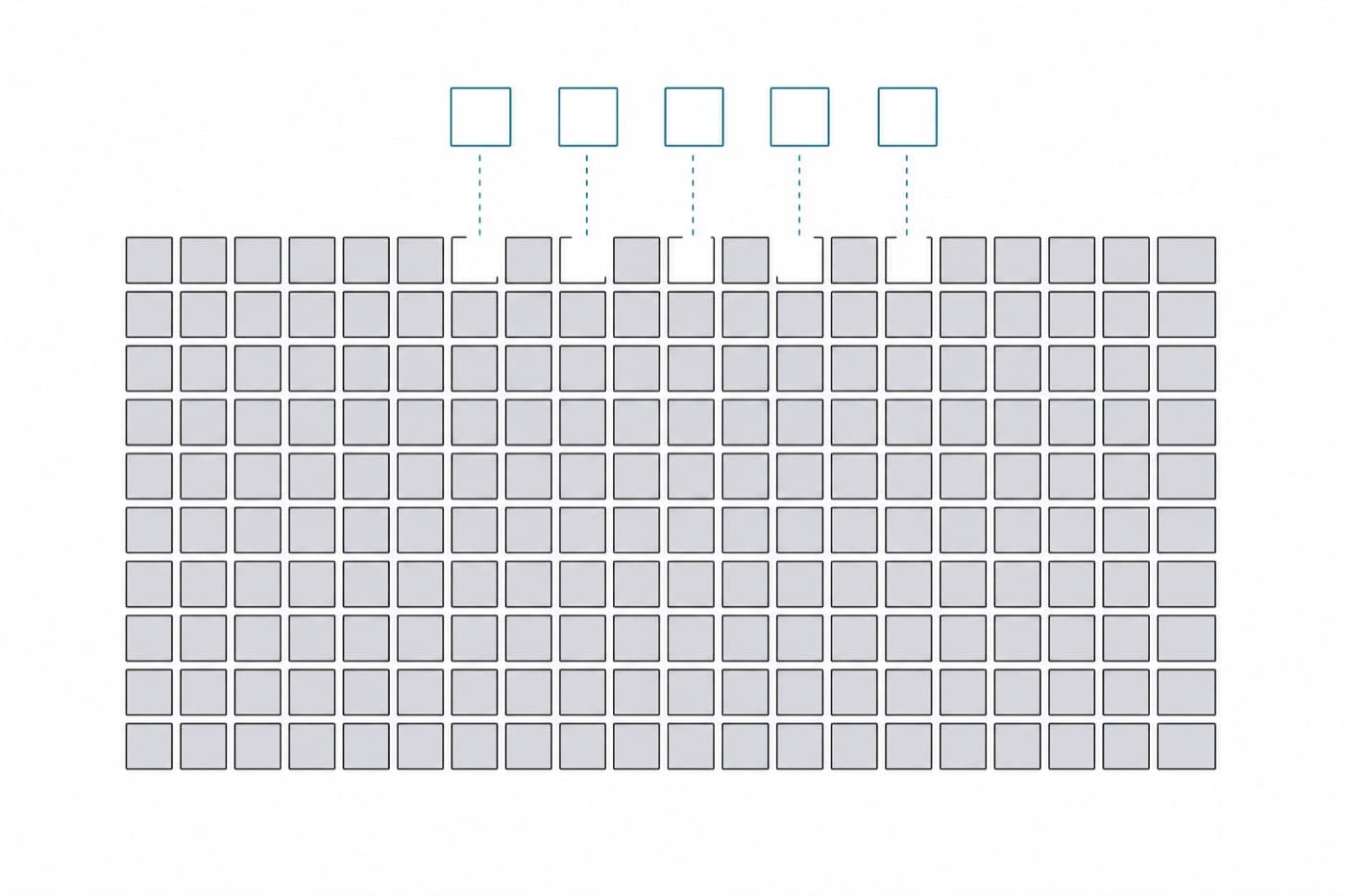
Where the line sits
| Inspect everything when | Sample when |
|---|---|
| A single defect stops a job or reaches a customer. | Defects are tolerable in small numbers and the lot is large. |
| The quantity is small enough that sampling saves nothing. | Checking every unit would take longer than the goods are worth. |
| It is a new supplier, or the first delivery of a new part. | The supplier has a record you can point at. |
| The last delivery failed. | The last several did not. |
The formal version
Published sampling plans work from three inputs: the lot size, an inspection level, and an acceptable quality limit. Those give a sample size and an accept or reject number: draw this many, and if more than this many are defective, reject the lot.
The value is not statistical elegance. It is that the numbers were agreed before the delivery arrived, so nobody is negotiating the standard while a driver waits.
The version most small operations should start with
- 1Write down the rule per part, not per delivery. Three tiers is usually enough: everything, a fixed sample, or count only.
- 2Put new suppliers and new parts on full inspection for the first three deliveries. That is where defects concentrate and it is a cheap way to earn the right to relax.
- 3Say what a defect is, in writing, before you need it. “Scratched” is not a criterion. A dimension with a tolerance is.
- 4Record what you inspected, not just what you found. A record saying ten units checked, none defective, is evidence. One saying “OK” is not.
Worth knowing
The most common failure is not sampling too little. It is sampling without recording the sample size, so a later dispute has no way to establish whether the check was thorough or a glance.
The wider checklist this fits into is in a receiving inspection checklist you can actually use.
Questions people ask
- What is an AQL?
- An acceptable quality limit: the worst average defect rate you are willing to treat as acceptable over a run of lots. It is not a target and it is not permission for that many defects in any single delivery. It is the number that, with the lot size, determines how many units you draw and how many defects reject the lot.
- How many units should I check?
- For a formal answer, the published tables in ISO 2859-1 give a sample size from the lot size and inspection level. For a practical one at small volumes, a defined, consistent number, every unit for small lots, a fixed proportion for large ones, beats an undefined 'have a look' by a wide margin, because it is repeatable and can be shown to a customer.
- Do I need a sampling plan if I trust my supplier?
- Trust is what determines the level of inspection, not whether you have a rule. Reduced inspection for a supplier with a long clean record is exactly what the standards contemplate, and it is a decision you can defend. Not inspecting because things have been fine is a habit you cannot.
- What do I do when a sample fails?
- Reject the lot, do not put it away, and tell the supplier the same day. The point of sampling is that the sample stands in for the lot, so a failing sample means a failing lot, not 'check a few more until it passes'. Screening the whole delivery afterwards is a decision to make deliberately, and usually at the supplier's cost.
- Is visual inspection enough?
- For damage in transit, usually yes. For conformance to a specification, it depends entirely on what the specification says: dimensions, finish, material certificates and functional tests are different questions, and each needs its own accept criterion agreed before the goods arrive rather than argued after.
Sources
- 01ISO 2859-1: sampling procedures for inspection by attributes · International Organization for StandardizationThe published sampling plans indexed by acceptable quality limit. The tables tell you how many units to draw from a given lot size and how many defects are allowed before the lot is rejected.
- 02ISO 9001:2015, clause 8.4.2: control of externally provided processes, products and services · International Organization for StandardizationRequires you to define the verification applied to what a supplier provides. It does not tell you the sample size; it requires you to have decided one.
DockCount does this job on a phone at the bay: count a delivery against the order it was placed on, photograph anything wrong, and the record writes itself. warehouse receiving software.