Incoterms, read from the buyer's side
Eleven rules, and the four a small importer actually meets. What each one makes you responsible for, and the one letter that decides whether a delay is your bill.
In short
- The term decides who carries risk, who pays which cost, and who does which formality. It does not decide who owns the goods.
- EXW looks like the cheapest quote on the page and is usually the most expensive to actually execute.
- Always name the year. FOB under the Incoterms rules and FOB as it is used on a US truck are not the same thing.
There are eleven rules and you can safely ignore most of them. What a small importer needs is a clear view of four, and one habit: knowing precisely where on the journey the goods become your problem.
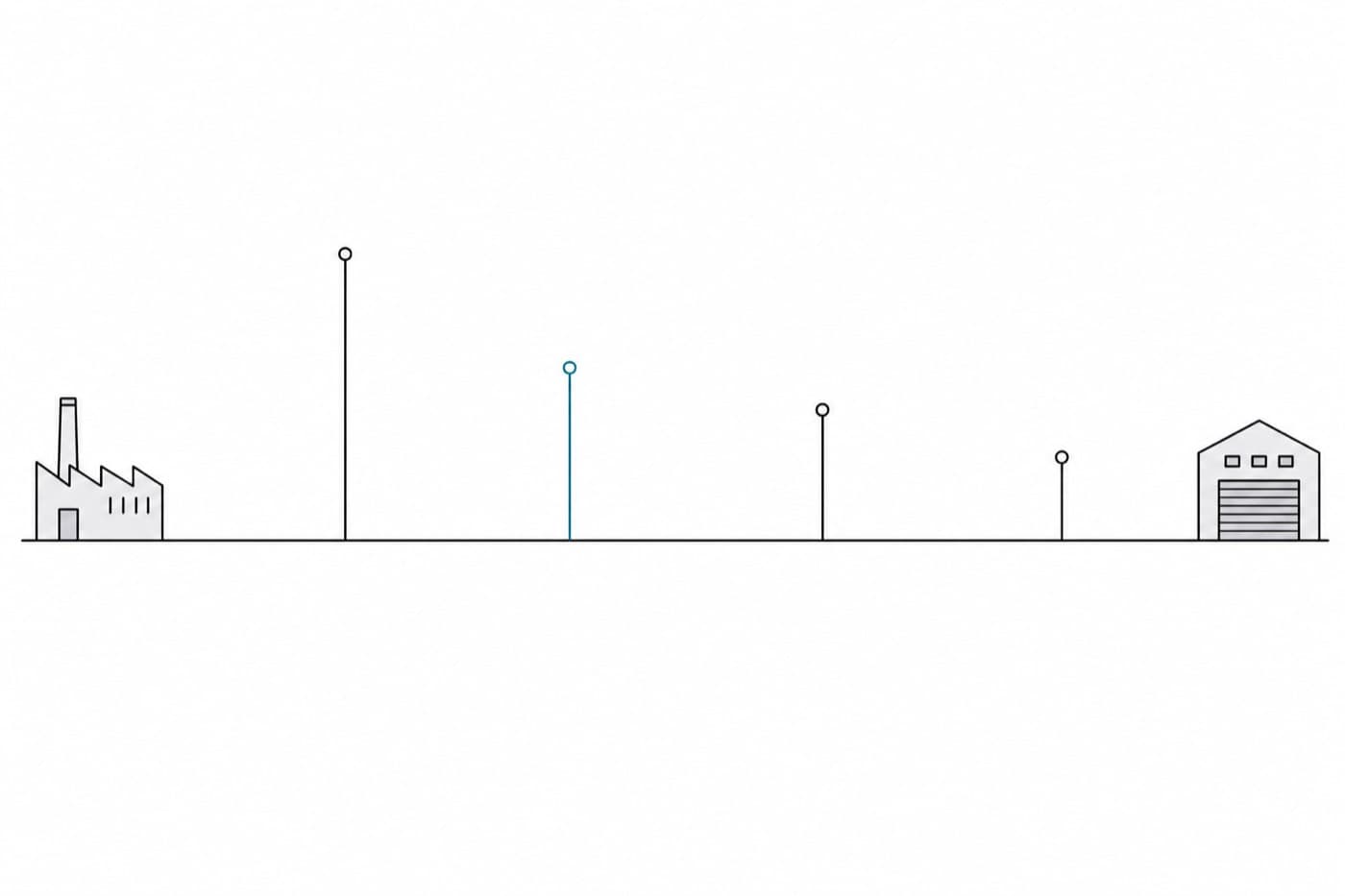
The four you will actually meet
| Term | Seller does | You do | Risk passes |
|---|---|---|---|
| EXW | Makes goods available at their premises. | Everything else, including export formalities. | At the seller's door. |
| FCA | Delivers to a named place, cleared for export. | Main carriage onward, import clearance, duties. | At the named place. |
| FOB | Delivers on board the vessel, cleared for export. | Sea freight, insurance, import, duties. | When goods are on board. |
| DDP | Everything, including import clearance and duties. | Unload it. | At your delivery address. |
Read the last column first. Everything else in a dispute follows from it: after that point, damage, delay, storage and demurrage are yours to pay and yours to claim.
The traps
- EXW on a quote you cannot execute. It is the lowest number and it hands you export clearance abroad. If your freight forwarder ends up arranging it anyway, you are operating under a term that does not describe what is happening.
- DDP with no agreement on who reclaims the tax. Delivered duty paid means the seller pays import duties, but the party who can actually recover import VAT or equivalent may be you. Agree it explicitly.
- Naming a term without a place. “FCA” alone means nothing. FCA plus a named place is the rule.
- Assuming insurance is included. Only two of the eleven rules oblige anyone to insure. Under the rest, if nobody bought cover, there is none.
What this changes at the dock
The person receiving an import needs to know one thing from the term: whether a damaged or short delivery is a claim they raise or a claim the supplier raises. Put it on the purchase order rather than leaving it in a contract file, so it is visible at the moment it matters.
The domestic version of the same question, which behaves differently, is in FOB origin or destination.
This describes how the rules generally work in the United States and links to the primary sources so you can read them yourself. It is not legal advice, and your contract with a supplier or carrier can change any of it. For money that matters, ask a lawyer.
Questions people ask
- Which Incoterm is best for a small buyer?
- Usually DDP if you can get it, because the seller handles export, freight, import clearance and duties and hands you goods at your door. It costs more in the price and it removes a great deal of work you are not set up to do. FCA is the common middle ground. EXW looks cheapest and quietly makes you responsible for export clearance in a country you have never been to.
- What is wrong with EXW?
- Under EXW the seller's obligation ends when goods are made available at their premises, which leaves you arranging collection and export formalities in the seller's country. Many buyers cannot practically do that, so it gets handled informally by the seller anyway: meaning the contract says one thing and reality does another, which is exactly where disputes start.
- Does FOB mean the same thing internationally as it does domestically?
- No, and this catches people constantly. Under the Incoterms rules FOB is a sea and inland waterway term with risk passing when goods are on board the vessel. US domestic usage treats FOB much more loosely to mean a place where title and risk transfer, including on trucks. Name the Incoterms rule and its year for anything crossing a border.
- Who pays if the container sits at the port?
- Whoever bears risk and the associated obligations at that point, which the term decides. This is where storage and demurrage charges appear, and they accrue daily whether or not anyone has told you they are accruing.
- Does the Incoterm decide who owns the goods?
- No. Incoterms allocate cost, risk and obligations. Title, meaning legal ownership, is dealt with by the sale contract and applicable law, and the two do not have to transfer at the same moment. Assuming they do is a common and occasionally expensive shortcut.
Sources
- 01Incoterms rules · International Chamber of CommerceThe publisher of the rules. They are revised periodically, which is why a contract should name the version, Incoterms 2020, rather than the three letters alone.
DockCount does this job on a phone at the bay: count a delivery against the order it was placed on, photograph anything wrong, and the record writes itself. What receiving software costs, and the free tier.