The stamp on a pallet that decides whether your import clears
Wood packaging crossing a border needs treating and marking. The rule is ISPM 15, the mark is small, and a missing one can get a whole consignment refused entry.
In short
- The rule is about the pallet, not the goods. A perfect shipment on the wrong wood is still a problem.
- Your supplier packs it and you bear the consequence. Put it in writing before it ships.
- Look for the mark on arrival and photograph it. It is the cheapest possible check.
This is the least interesting thing in international freight and one of the most disruptive when it goes wrong, because the failure is binary and it happens before you ever see the goods.
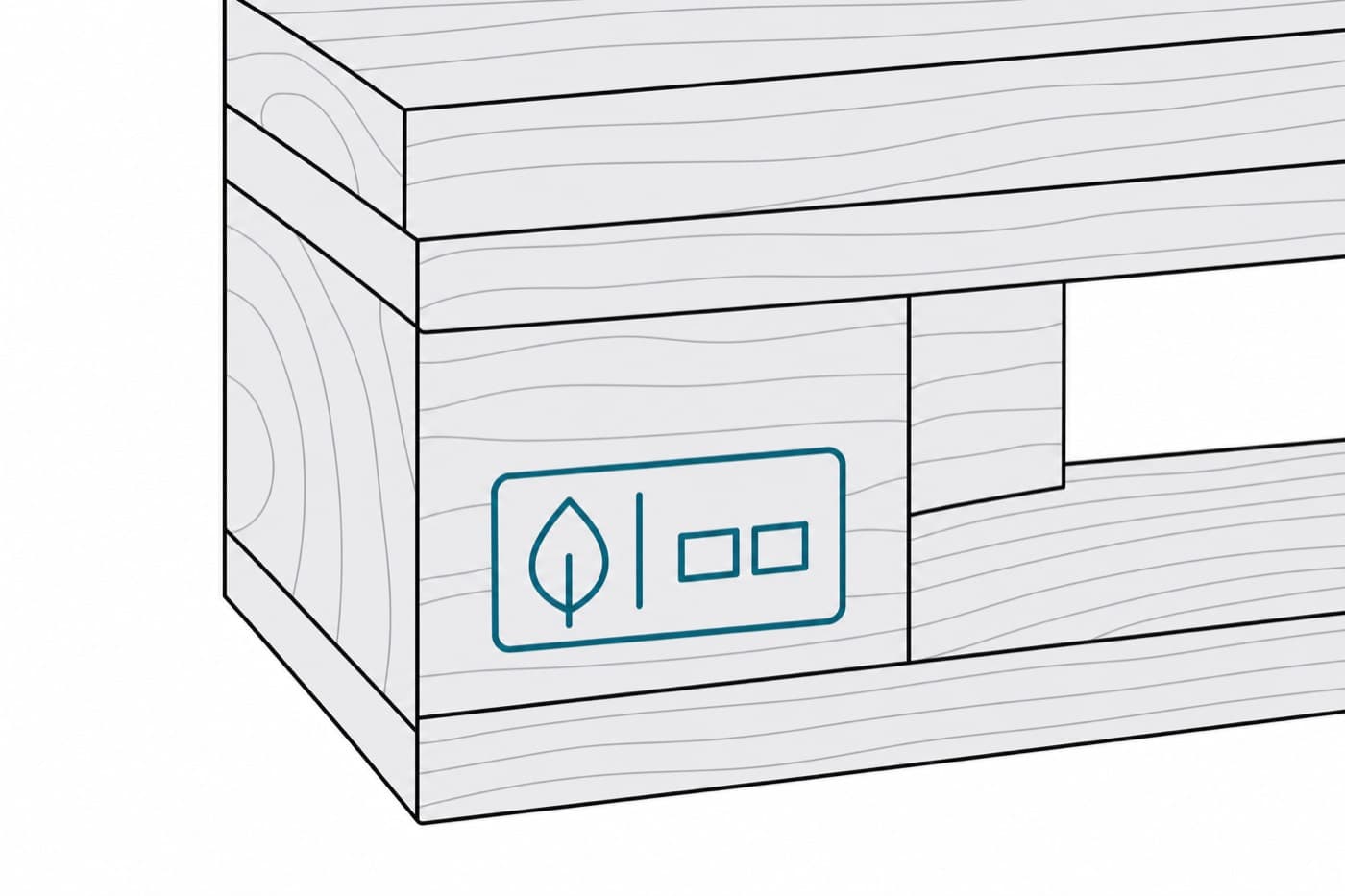
What the mark says
Four things, in a small rectangle burned or stencilled onto the wood: the IPPC symbol, a country code, a unique producer number, and a treatment code. HT means heat treated, MB methyl bromide, DH dielectric heating. It should appear on at least two opposite sides so it can be seen without turning the pallet over.
Worth knowing
A mark that is present but illegible is treated as no mark by some inspectors. If you are importing regularly, a photograph of the stamp at receiving costs nothing and settles the question later.
What is in scope
| In scope | Generally out of scope |
|---|---|
| Solid wood pallets | Plywood, OSB, particleboard and other processed wood |
| Crates and boxes made of solid wood | Cardboard and paper packaging |
| Dunnage, blocking and bracing | Plastic and metal pallets |
| Wooden spools and drums | Wood thinner than 6mm |
What to do about it
- 1Say it in the routing guide. One line: all wood packaging on international shipments must be ISPM 15 compliant and legibly marked. Most suppliers who export already comply and the ones who do not need telling once.
- 2Check on arrival and photograph the mark. Add it to the receiving checks for imports only, so it does not clutter domestic deliveries.
- 3Do not accept a promise instead of a stamp. The inspector at the border is not looking at your email thread.
Where this belongs among the other checks: the routing guide, which is the document that tells suppliers how to ship to you.
Questions people ask
- What does the ISPM 15 stamp look like?
- A rectangular mark containing the IPPC symbol, a two-letter country code, a unique number identifying the certified producer, and a treatment code: HT for heat treatment, MB for methyl bromide fumigation, DH for dielectric heating. It should be legible and appear on at least two opposite sides of the item.
- Does it apply to plywood pallets and cardboard?
- Processed wood-based products such as plywood, OSB and particleboard are generally out of scope because the manufacturing process already destroys pests, and cardboard is not wood packaging in the relevant sense. Solid wood pallets, crates, dunnage, blocking and bracing are in scope.
- What happens if a pallet arrives unmarked?
- It depends on the destination country, and none of the options are cheap. Consignments can be held, the packaging treated or destroyed, or the whole shipment re-exported, generally at the importer's expense, with the goods unavailable throughout. Some authorities also record the incident against the importer.
- Whose responsibility is it?
- Practically, the shipper packs it, but the importer bears the consequence at the border. That asymmetry is why it belongs in your routing guide as an explicit instruction rather than an assumption.
- Does it apply to domestic shipments?
- No. ISPM 15 governs wood packaging in international trade. Domestic movements within a country are outside it, which is why a pallet that has circulated locally for years may carry no mark at all and be perfectly legitimate.
Sources
- 01International Standards for Phytosanitary Measures · International Plant Protection ConventionISPM 15 is the standard covering the regulation of wood packaging material in international trade. Enforcement and penalties are set nationally, so the consequence of non-compliance varies by destination country.
DockCount does this job on a phone at the bay: count a delivery against the order it was placed on, photograph anything wrong, and the record writes itself. What receiving software costs, and the free tier.