Damaged goods claim letter template, with the four things that make it a claim
A copy-and-send claim letter for a carrier or a supplier, and the specific elements a claim has to contain before anybody is obliged to act on it.
In short
- A claim is a legal act with required elements. Most people send an email that is not one and then wonder why nothing happens.
- Name a figure. A claim with no amount demanded is not a claim under the federal rules.
- Send it the same week. The deadline is months away; the evidence has a life measured in hours.
The gap between “this arrived damaged, please advise” and a filed claim is a specific one, and it is written into the federal rules on claim processing. Three elements turn a message into a claim: identification of the shipment, an assertion of liability, and a demand for a specific or determinable sum.
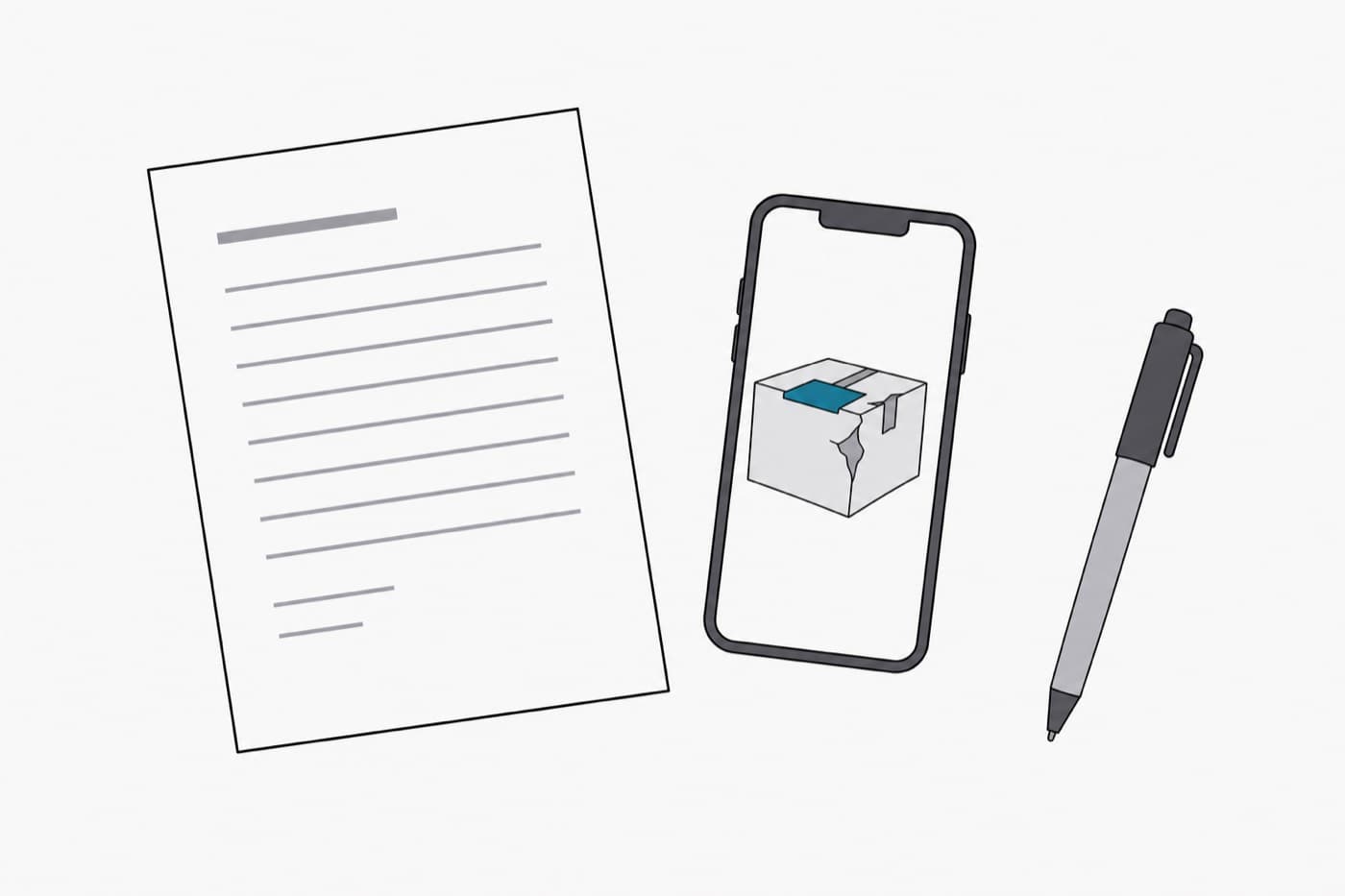
Damaged goods claim
Copy this. Replace what is in brackets. Attach the photographs.
[Carrier or supplier name]
[Their claims address or email]
[Date]
Claim for loss and damage: [your company], [BOL or PO number]
We are filing a claim for damage to goods delivered on [date] at [time], under bill of lading number [number] / purchase order number [number], carried by [carrier] from [origin] to [our address].
The shipment consisted of [number] handling units. On arrival, [number] were damaged: [describe specifically, for example, two cartons crushed on one corner with contents fractured]. This was noted on the delivery receipt at the time of delivery and signed by the driver. Photographs taken before the load was moved are attached.
We hold [carrier or supplier] liable for this loss under [the bill of lading and 49 U.S.C. 14706, for an interstate carrier / our purchase order terms, for a supplier].
We claim the sum of [$ amount], being [invoice value of the damaged goods $X, plus freight charges $Y / the cost of repair, $Z, which is lower than replacement]. The supplier invoice evidencing value is attached.
The damaged goods are being held at our premises, unmoved and available for inspection, until [date]. Please confirm whether you wish to inspect them before we dispose of them.
Please acknowledge receipt of this claim.
[Name], [title], [company], [phone], [email]
Why each paragraph is there
| Paragraph | Doing what |
|---|---|
| Shipment identification | Satisfies the first required element. Without a bill of lading or pro number nothing can be looked up and the clock does not start. |
| What was damaged, specifically | Turns a complaint into a fact. Counts and locations, not adjectives. |
| Noted on the delivery receipt | Tells them, early, that a clean POD is not available to them as a defence. |
| Statement of liability | The second required element. Say plainly that you hold them liable. Politeness is fine; vagueness is not. |
| A specific amount | The third required element, and the one most often missing. Show the arithmetic. |
| Goods held for inspection | Removes their most common delaying question and protects you from being told you disposed of the evidence. |
| Request for acknowledgement | Creates a dated record that it was received. |
Three things that sink a good claim
- 1Disposing of the goods or the packaging. Hold both until the claim is settled or you have written permission. Concealed damage claims are won and lost on the outer carton.
- 2Claiming a round number with no evidence. Attach the supplier invoice. A figure with no document behind it invites a counter-offer at half.
- 3Waiting to be complete. File within the deadline with what you have and supplement it. A late perfect claim is worth less than an early adequate one.
This describes how the rules generally work in the United States and links to the primary sources so you can read them yourself. It is not legal advice, and your contract with a supplier or carrier can change any of it. For money that matters, ask a lawyer.
How long you have, and where those periods come from: freight damage claim deadlines. If the damage was not visible on arrival, read concealed damage first.
Questions people ask
- What makes a letter a formal freight claim?
- Three things together: it identifies the shipment well enough for the carrier to find it, it asserts that the carrier is liable for the loss or damage, and it demands a specific or determinable amount of money. A description of damage with no figure attached is correspondence, not a claim.
- Do I claim against the carrier or the supplier?
- It depends on what went wrong and who owned the goods in transit. Damage caused in transit is normally a carrier matter, and the freight terms decide whether you or your supplier has the right to claim. Wrong items, short counts against the order, or goods that were already defective are supplier matters.
- How long does a carrier have to respond?
- Under the federal claim processing rules a carrier must acknowledge a claim and, within 120 days of receiving it, pay it, decline it, or make a settlement offer, or notify you of the status and why more time is needed, at 60 day intervals.
- How much can I claim for?
- Generally the actual loss, which is usually the invoice value of the goods plus freight, subject to any liability limit in the carrier's tariff or bill of lading. Released value rates and per-pound limits are common and can be far below the value of what was lost, which is worth checking before you ship rather than after.
- Should I send the claim by email or post?
- Email is normally fine and is what most carriers now prefer, but keep proof of when you sent it and to whom. If the amount is large or a deadline is close, send it both ways. What matters is that it arrived, that it contained the required elements, and that you can show both.
Sources
- 0149 CFR § 370.3: Filing of claims · Electronic Code of Federal RegulationsSets out what a written communication must contain to be treated as a filed claim: identification of the shipment, an assertion of liability, and a demand for a specified or determinable amount.
- 0249 CFR § 370.9: Disposition of claims · Electronic Code of Federal RegulationsThe carrier must pay, decline or make a settlement offer within 120 days of receiving the claim, or explain the delay.
- 03UCC § 2-607. Effect of Acceptance; Notice of Breach · Cornell Legal Information InstituteFor a claim against a supplier rather than a carrier: notice within a reasonable time of discovery, or the remedy is barred.
DockCount does this job on a phone at the bay: count a delivery against the order it was placed on, photograph anything wrong, and the record writes itself. What receiving software costs, and the free tier.