Cases, eaches and the shortage that is not real
The order is in cases, the delivery note is in units, and the system now says you are a hundred and ninety short. Nobody is wrong and everybody is annoyed.
The short answer
A unit of measure mismatch happens when an order, a delivery and an invoice count the same goods in different units, such as cases against individual items. It produces shortages and overages that are arithmetic rather than real, and the fix is to decide which unit the record is kept in and convert everything to it at the point of counting.
Written by Hamza Rivera, founder, dockcount. How these are checked.
You order ten cases. Ten cases arrive. The person at the bay opens one, sees twenty bottles, and records two hundred. The order says ten. The record now shows an overage of a hundred and ninety, and everybody involved counted correctly.
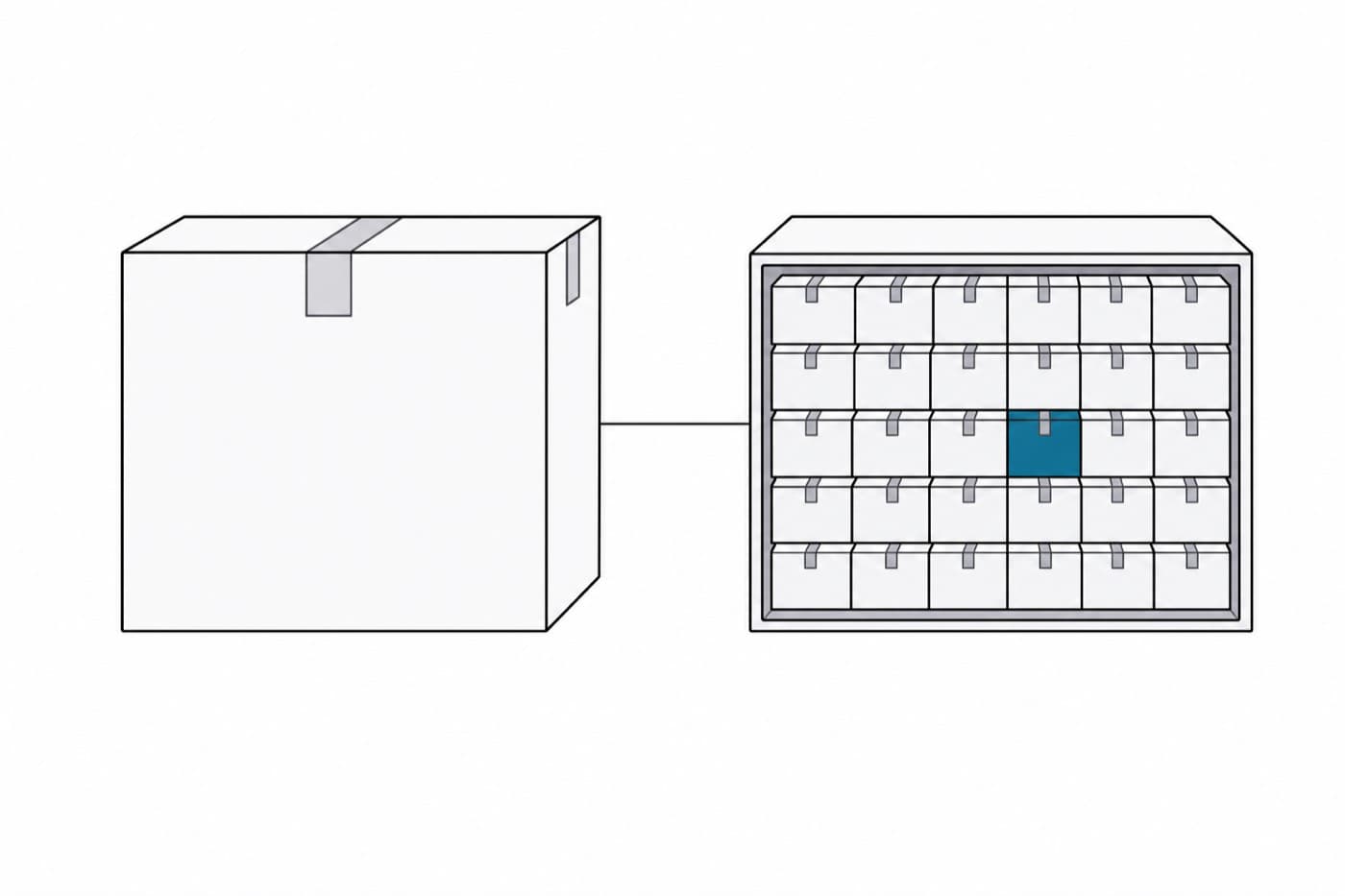
Put another way
You ask for two dozen eggs and somebody hands you twenty-four eggs. Both of you are right and the shopping list still looks wrong.
Where it comes from
- The order was raised in the supplier's selling unit and received in the unit you actually use.
- The supplier changed their case pack and did not say. Twelve became ten and the part number stayed the same.
- A mixed pallet where some lines are cases and some are singles, and nobody said which was which.
- Weighed or cut goods, where the order is in metres or kilos and the delivery arrives as pieces.
Worth knowing
The case pack changing without the part number changing is the nastiest version, because every document still agrees with every other document and only the physical count disagrees.
Fixing it
- 1Pick one unit per line and write it on the order. The unit belongs to the line rather than to the supplier or the company, because one order can hold both.
- 2Convert at the bay, not afterwards. The person holding the goods knows how many are in the box. Somebody reconciling a spreadsheet next week does not.
- 3Record what you counted and what you converted it to. “10 cases of 20” survives a challenge. “200” does not.
- 4Check the pack size when a discrepancy is a clean multiple. A shortage that is exactly a twelfth or exactly ten times is almost never a real shortage.
The tell
Real shortages are untidy. You ordered a hundred and got ninety-seven. Unit mismatches are suspiciously round: exactly ten times, exactly a twelfth, exactly half. If the number is neat, check the pack size before you ring the supplier.
DockCount does this job on a phone at the bay: count a delivery against the order it was placed on, photograph anything wrong, and the record writes itself. Why reading the slip does not fix this.