Purchase order, packing slip, invoice: which is which
Three documents describe one delivery, they are written by different people at different times, and only one of them is a request for money.
The short answer
A purchase order is what you asked for, written by you before anything ships. A packing slip is what the supplier says they sent, written by them and travelling with the goods. An invoice is what the supplier wants paying for, written by them afterwards. All three can disagree, and the point of receiving is to find out where.
Written by Hamza Rivera, founder, dockcount. How these are checked.
Every delivery generates three documents, and almost every receiving argument comes from somebody treating two of them as if they were the same thing. They are written by different people, at different times, for different reasons.
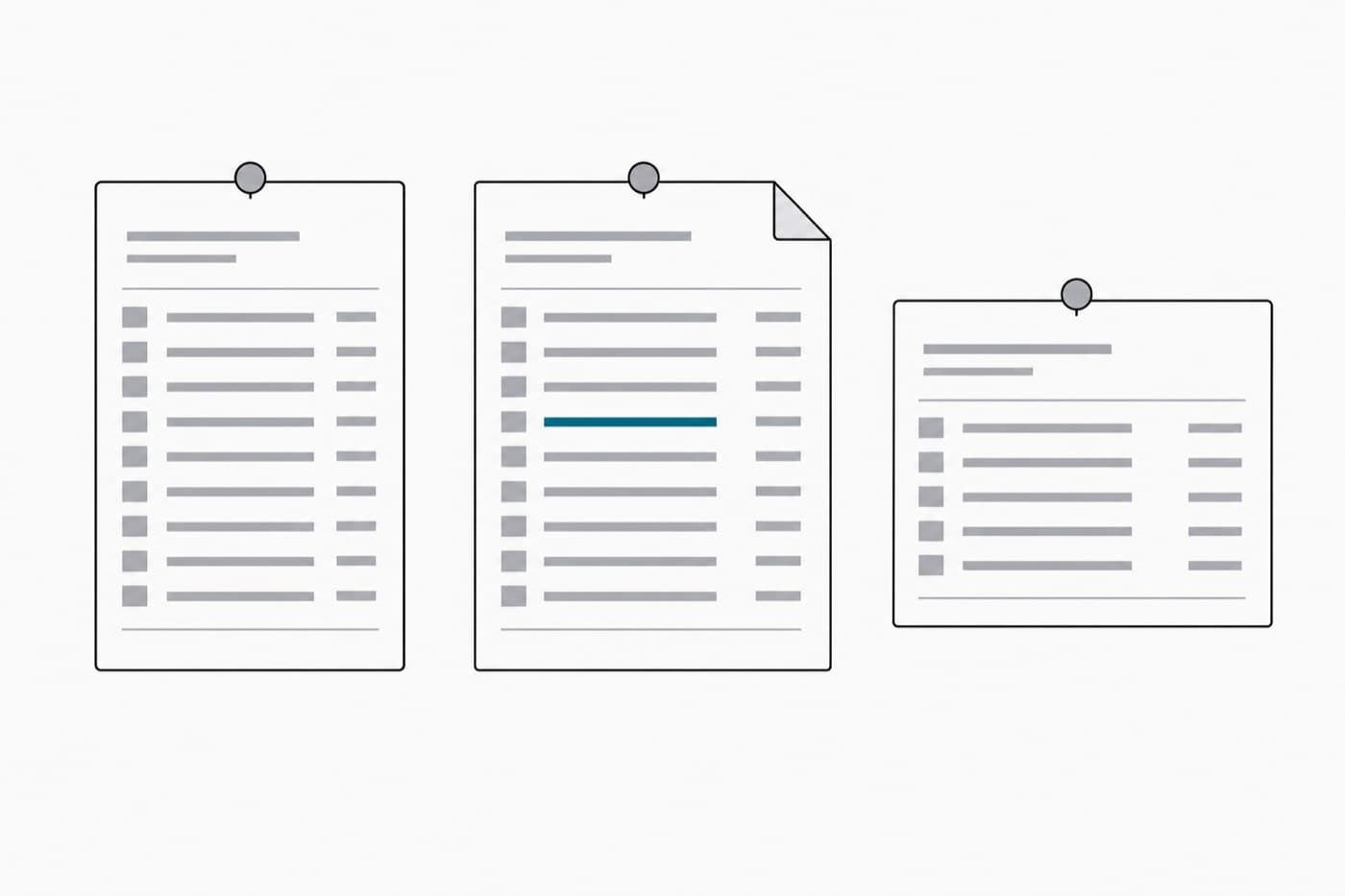
| Document | Written by | When | Says |
|---|---|---|---|
| Purchase order | You | Before anything ships | What we asked for and the price agreed |
| Packing slip | The supplier | When they pack it | What they believe is in the shipment |
| Invoice | The supplier | After delivery | What they want paying for |
Put another way
You text a friend for six eggs and a loaf. That is the purchase order. They turn up and say “six eggs and a loaf in the bag”, which is the packing slip. A week later they ask you for four pounds, which is the invoice. Nobody in that story has opened the bag.
The one that is missing
There is a fourth document, and it is the only one written by somebody who actually looked in the bag. It is your own record of what arrived, and it goes by goods received note or receiving report depending on who is asking.
Without it, an invoice can only be checked against the order. That tells you whether the supplier billed what you asked for. It cannot tell you whether any of it turned up.
Why the packing slip is not proof
A packing slip is the supplier’s claim. It is printed before the pallet is wrapped, and it is right most of the time, which is exactly what makes the rest of the time expensive. Signing for a delivery on the strength of the slip means signing for what somebody else typed.
Worth knowing
A driver asking you to sign the delivery note is not asking you to agree the count. They are asking you to confirm the freight was handed over. If you have not counted it, say so on the paperwork before you sign. See what to write before you sign.
What to do with each one
- Purchase order: keep it findable. If nobody can pull up the order in the minute a driver is waiting, the delivery cannot be checked against anything.
- Packing slip: read it, then check it. Treat it as a hint about what should be there, and never as the count itself.
- Invoice: match it against what you recorded on the day, not against the order. The order is what you hoped for.
DockCount does this job on a phone at the bay: count a delivery against the order it was placed on, photograph anything wrong, and the record writes itself. How it reads a packing slip from a photograph.