Damaged or short on arrival: what to do before you sign
Almost everything that decides whether you get paid back happens in the two minutes before the driver leaves.
The short answer
Write the problem on the carrier's paperwork before you sign it, in specific words, and photograph it. A clean signature is a statement that the goods arrived in good order, and it is very hard to walk back afterwards. If damage is severe you can refuse all or part of the delivery, but note the reason on the paperwork either way.
Written by Hamza Rivera, founder, dockcount. How these are checked.
A signature on a delivery note is a statement. Signed clean, it says the freight arrived in apparent good order. Everything you find afterwards is now something you have to prove happened before it got to you.
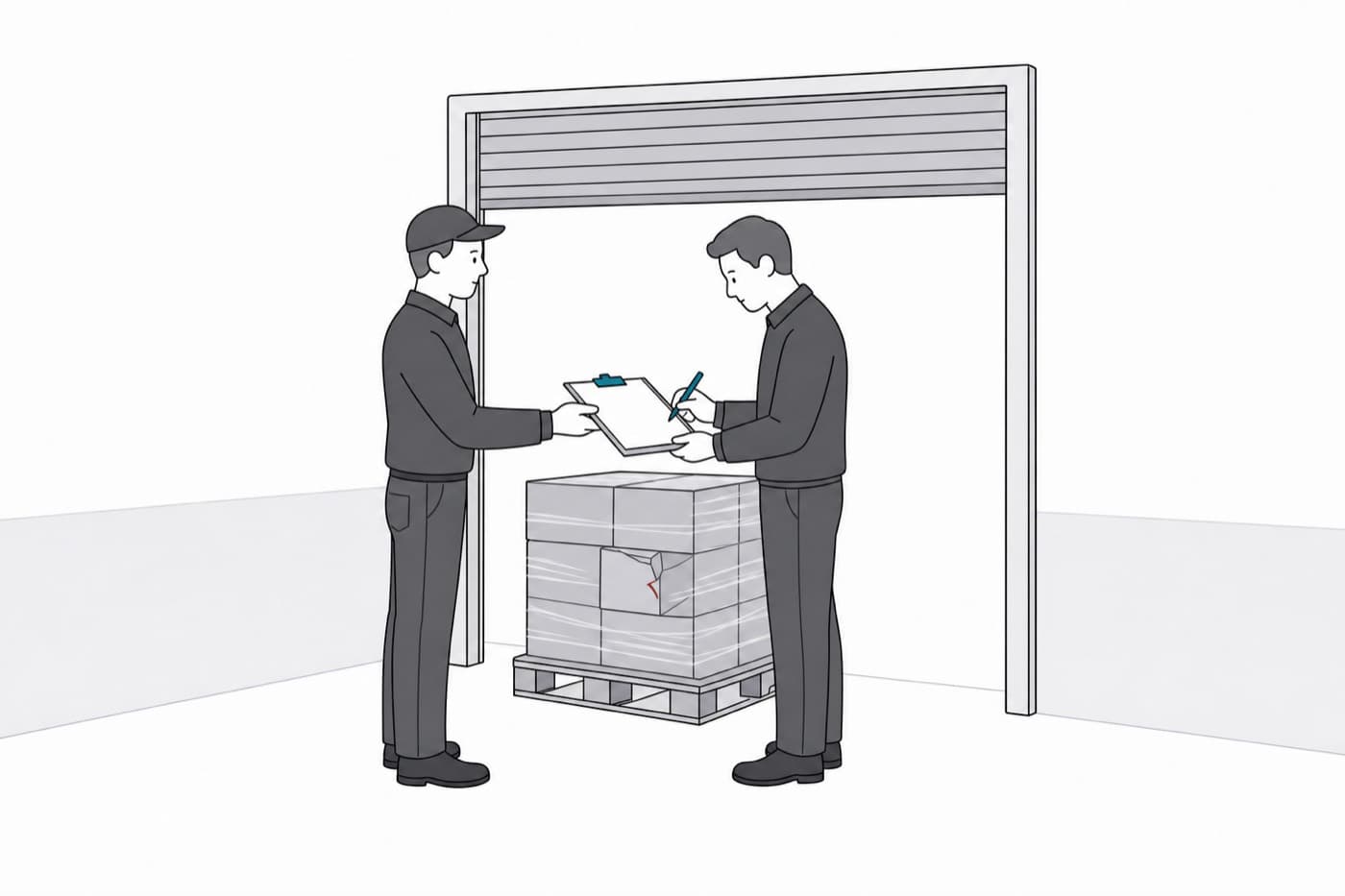
This is why the two minutes before the driver leaves are worth more than the two weeks after.
Write it down, specifically
Vague notes protect nobody. Compare these two, both written on the same delivery.
| Weak | Strong |
|---|---|
| Damaged | 2 cartons crushed on top pallet, photographed at delivery |
| Short | Pallet 2 of 3 missing, 3 pallets on BOL, 2 received |
| Wet | Water staining on lower cartons of pallet 1, contents not yet checked |
- Say how many, not that some.
- Say where: which pallet, which carton, top or bottom.
- Say what you have not checked, if you have not checked it.
- Photograph it before it is moved, with the packaging still on.
Refusing a delivery
You can refuse all of a delivery or part of it. Refusing part is usually the sensible option: take the good pallets, send back the crushed one, and write on the paperwork exactly what went back and why.
Worth knowing
Refusing an entire delivery over one damaged carton tends to cost more than it recovers, because the whole order restarts. Take what is usable and claim on the rest.
Concealed damage
Sometimes the outside is fine and the inside is not. That is concealed damage, and it is the hardest case, because the paperwork already says the goods arrived in good order.
Carriers set their own windows for reporting it and they are short, often counted in days rather than weeks. Check the terms of the carrier who actually delivered, and report it the day you find it rather than the day you get round to it. Keep the packaging, keep the goods where they are, and photograph everything before anything is moved.
Who to tell
- Damage in transit is usually the carrier's problem, and the delivery paperwork is the evidence.
- Damage that was packed badly in the first place is usually the supplier's problem, and the photographs are the evidence.
- You will not always know which it is on the day. Record it properly and let purchasing decide who to chase.
DockCount does this job on a phone at the bay: count a delivery against the order it was placed on, photograph anything wrong, and the record writes itself. What a short or damaged delivery actually costs.