Blind receiving: why hiding the number improves the count
Show somebody the expected quantity and they tick it. Hide it and they count it. That is the entire technique.
The short answer
Blind receiving means counting a delivery without being shown the quantity that was ordered, so the number recorded is one that was genuinely counted. Semi-blind shows the items but hides the quantities. It costs a little more time at the bay and catches shortages that a confirming count reads straight past.
Written by Hamza Rivera, founder, dockcount. How these are checked.
Put a number in front of somebody and ask them to check it. Most of the time they will glance, agree, and move on. Take the number away and ask them how many there are, and they will count.
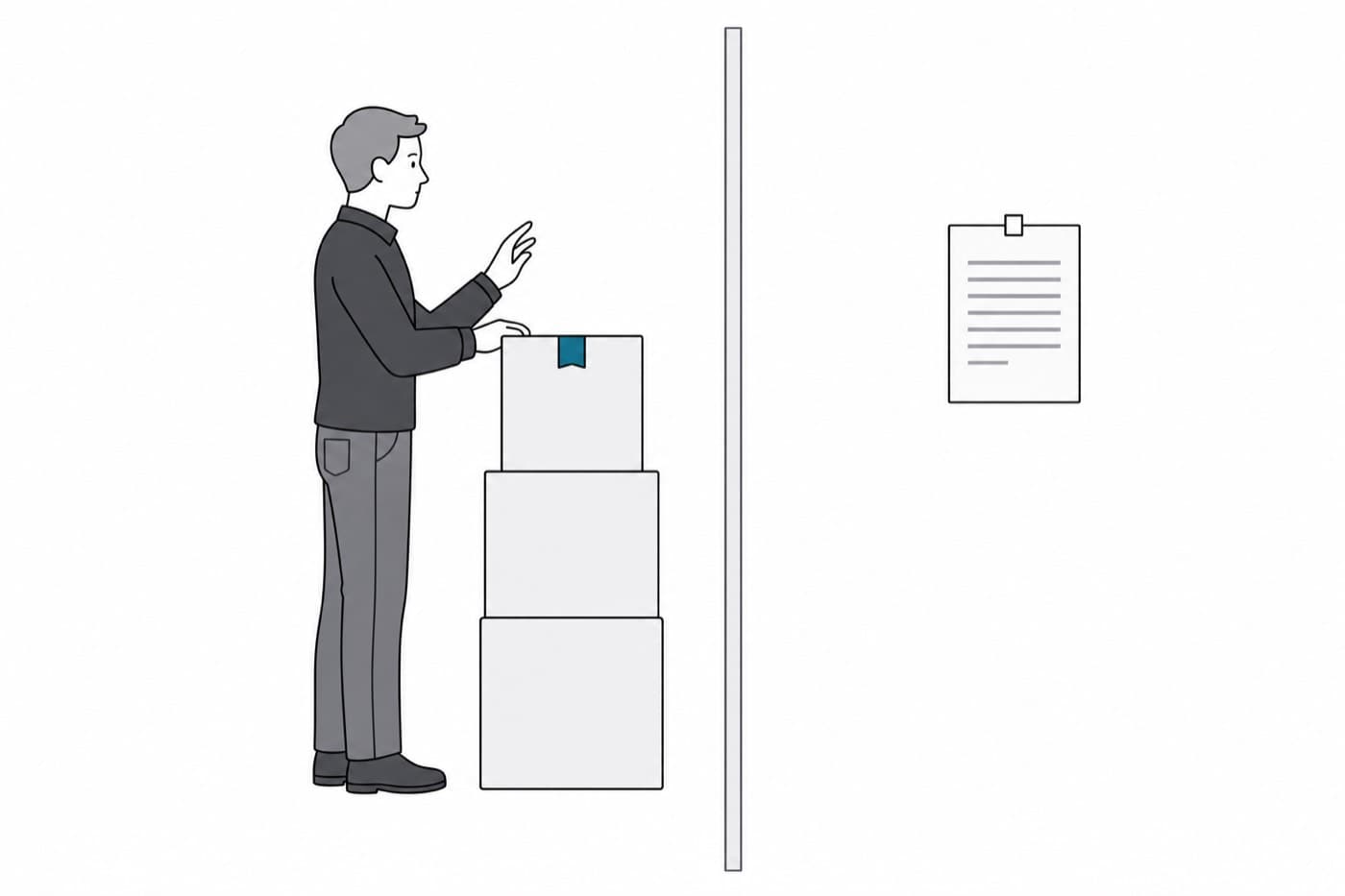
That difference has a name in psychology and a cost on a loading bay. A count made while looking at the expected answer is a confirmation, and confirmations are much easier to get wrong than counts.
Put another way
A colleague hands you a stack of twenty pages and says “that’s twenty”. You riffle it and agree. Hand you the same stack with no number and you will count them, and sometimes get nineteen.
The three ways it is run
| Method | The receiver sees | Catches |
|---|---|---|
| Open | Items and quantities | Obvious errors only |
| Semi-blind | Items, no quantities | Wrong quantities on the right items |
| Fully blind | Neither | Wrong quantities and items nobody ordered |
Semi-blind is where most companies land. Fully blind is slower, because the receiver has to identify every item before counting it, and on a mixed pallet of similar parts that is real time.
What it costs
- Time. A counted line takes longer than a confirmed one, and on a fifty-line delivery that adds up.
- Goodwill, at first. People who have been ticking boxes for years experience it as being distrusted.
- Rework, if you go fully blind on similar-looking parts and people pick the wrong line to count into.
When it is worth it
It pays where the cost of a missed shortage is high and the deliveries are large enough that nobody is really counting. High-value parts, long lead times, and any supplier whose short deliveries you have already noticed are the obvious cases.
It pays much less on small deliveries of cheap goods, where the count is obvious at a glance and the paperwork costs more than the risk.
Worth knowing
Blind receiving only works if the blank stays blank. A system that pre-fills the ordered quantity and lets the receiver adjust it is an open count wearing a disguise.
DockCount does this job on a phone at the bay: count a delivery against the order it was placed on, photograph anything wrong, and the record writes itself. Running a blind count in receiving software.