The loading dock is the most dangerous place in a small building
Moving vehicles, moving loads and people on foot in the same few metres. The hazards that actually cause injuries at goods in, and what the rules require.
In short
- Vehicles and people in the same few metres is the whole problem. Everything else is a variation on it.
- Forklift operator training is a legal requirement, not a nicety, and it must be recorded.
- A small operation has the same obligations and fewer people around when something goes wrong.
Every other page here treats the dock as a place where paperwork happens. It is also the place in most small buildings where the machinery is heaviest, the loads are highest and somebody is usually in a hurry because a driver is waiting.
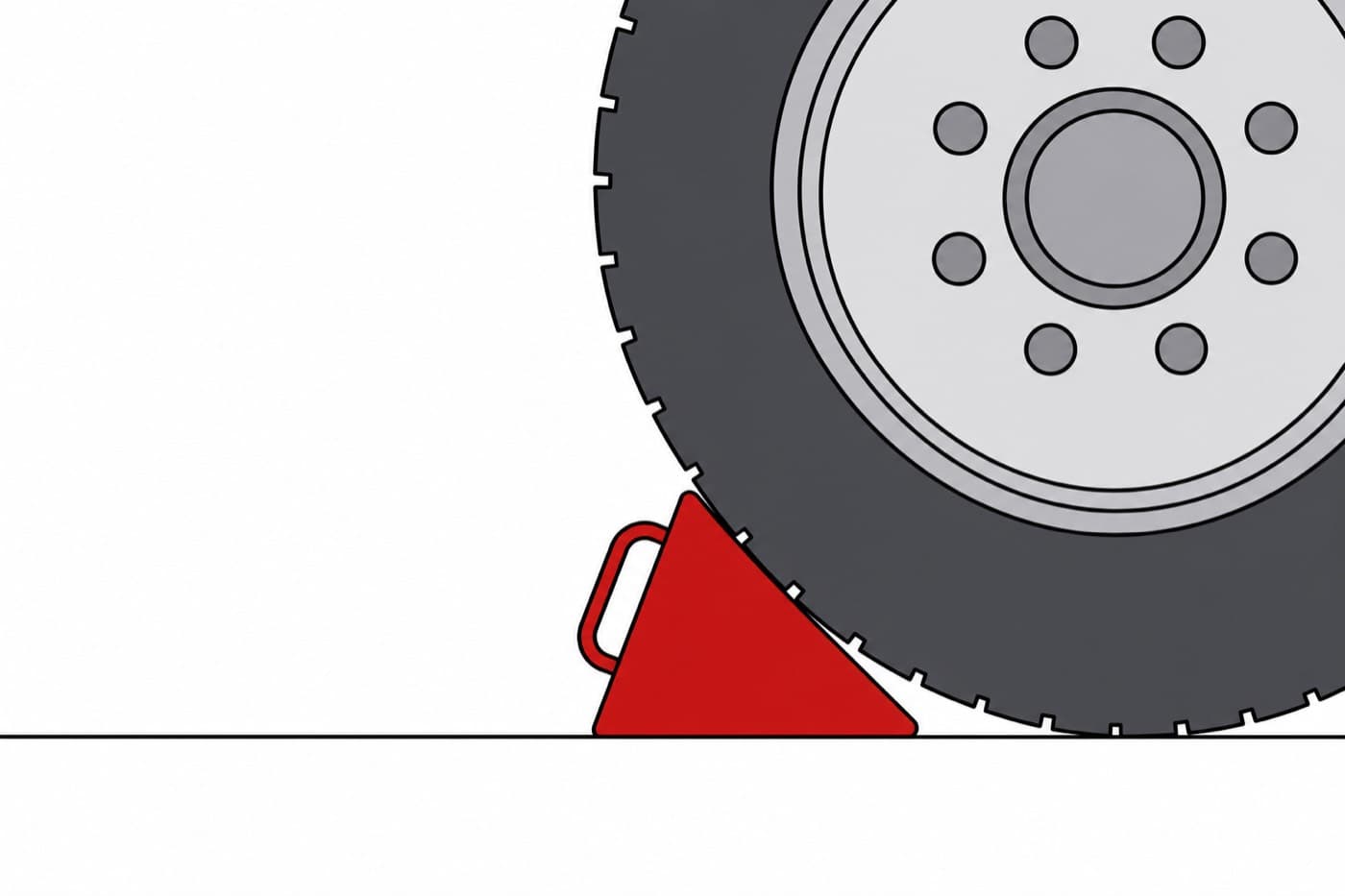
The four that cause the serious ones
| Hazard | What happens | The control |
|---|---|---|
| Vehicle movement | A trailer departs or creeps while a truck is inside it. | Chocks or a restraint, keys held, and an agreed signal with the driver. |
| Falling loads | Badly stacked or unstable pallets, or a load struck while being moved. | Do not accept unstable pallets. Restack before moving rather than after it falls. |
| Pedestrian struck | Someone on foot in a route used by powered trucks. | Separate the routes. Mark them. Enforce it even when it is inconvenient. |
| Fall from the edge | A step backwards off an open dock. | Lighting, marking, barriers where the dock is open. |
What the rules actually require
In the United States the two provisions that matter most at goods in cover materials handling generally: aisles and passageways kept clear, materials stored so they cannot slide or collapse, and powered industrial trucks, which requires trained and evaluated operators and sets out how trailers must be secured before a truck enters them.
The training requirement is the one people are most often quietly outside. Long experience is not training, and the certification has to record who was trained, by whom, and when.
The cheap controls, in order of return
- 1Chock every trailer, every time, before anything enters it. No exceptions for a quick one.
- 2Agree a signal with drivers so nobody pulls away while somebody is inside. Keys held at the desk is the traditional version and it still works.
- 3Mark a pedestrian route and keep it. The rule fails the first time somebody senior walks across the vehicle route, so it has to apply to everyone.
- 4Refuse unstable pallets before they are moved. A leaning load is a receiving exception as well as a hazard, and you were going to note it anyway.
- 5Light it properly. Most docks are lit for a vehicle, not for a person reading a label.
Worth knowing
None of this is separate from receiving. A leaning pallet, a load that shifted in transit and a trailer packed badly are all safety hazards and receiving exceptions at the same moment, and the person looking at them is the same person.
This describes how the rules generally work in the United States and links to the primary sources so you can read them yourself. It is not legal advice, and your contract with a supplier or carrier can change any of it. For money that matters, ask a lawyer.
Questions people ask
- What is the most common serious hazard at a loading dock?
- Vehicle movement. A trailer pulling away while a forklift is inside, or creeping forward under the repeated impact of a truck entering and leaving, produces some of the worst outcomes in the whole of materials handling. Wheel chocks or a restraint system and a communication protocol with the driver are the controls.
- Does OSHA require forklift training?
- Yes. The powered industrial truck standard requires operators to be trained and evaluated as competent, with refresher training in defined circumstances such as an accident, a near miss, or a change of equipment or conditions. Familiarity from long use is not the same as training and does not satisfy it.
- What about a small operation with one forklift?
- The requirements do not scale down. A company with one truck and one operator has the same obligation to train and evaluate, and arguably more exposure, because there is nobody else present who knows what to do when it goes wrong.
- What is the risk from the dock edge itself?
- Falls from a dock edge, and pedestrians struck by reversing vehicles in the same area. Separating people from vehicle routes is the single most effective control, followed by lighting and clear marking of the edge.
- Is any of this required to be written down?
- Training and evaluation of powered industrial truck operators must be certified, meaning recorded with who was trained, who did it and when. Beyond that, the value of writing the rest down is less about compliance than about the fact that an unwritten rule is one nobody can be held to.
Sources
- 0129 CFR 1910.176: handling materials, general · Occupational Safety and Health AdministrationCovers aisles and passageways, secure storage of materials, and housekeeping in areas where materials are handled.
- 0229 CFR 1910.178: powered industrial trucks · Occupational Safety and Health AdministrationIncludes the requirement that operators be trained and evaluated, and the rules on securing trailers and railcars before they are entered by a truck.
DockCount does this job on a phone at the bay: count a delivery against the order it was placed on, photograph anything wrong, and the record writes itself. What receiving software costs, and the free tier.