How to count a pallet without unwrapping it, and when to unwrap it anyway
The arithmetic that makes a wrapped pallet countable in thirty seconds, the three patterns that break it, and the point at which the shortcut stops being safe.
In short
- Cartons per layer times layers. The whole method, and it takes about thirty seconds.
- The top layer is where the shortage hides, because it is the one that gets made up from what was left.
- A supplier seal proves nobody opened it in transit. It proves nothing about what went in.
A shrink-wrapped pallet looks like something you either take on trust or spend twenty minutes dismantling. It is neither, and the arithmetic that makes it countable is the first thing worth teaching a new receiver.
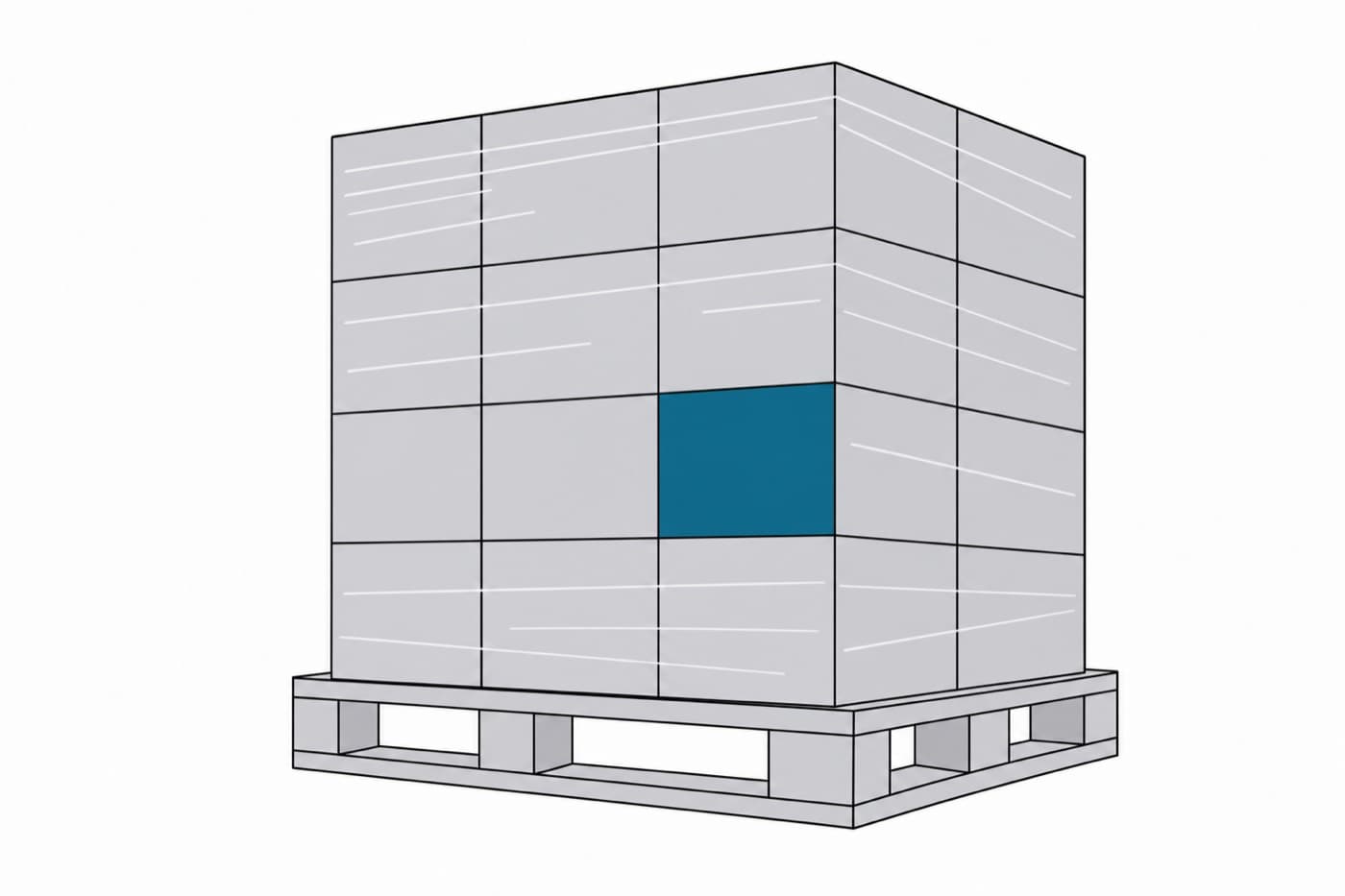
The method
- 1Count one full layer, from two adjacent sides. A three by four layer reads as three from one side and four from the other. Multiply and you have the layer count without seeing the middle.
- 2Count the layers up the side. The seams between cartons are visible through most wrap. Count them at a corner, where two faces meet, so a mis-set carton cannot hide the join.
- 3Multiply, then subtract the top. Treat the top layer as unknown until you have looked at it directly.
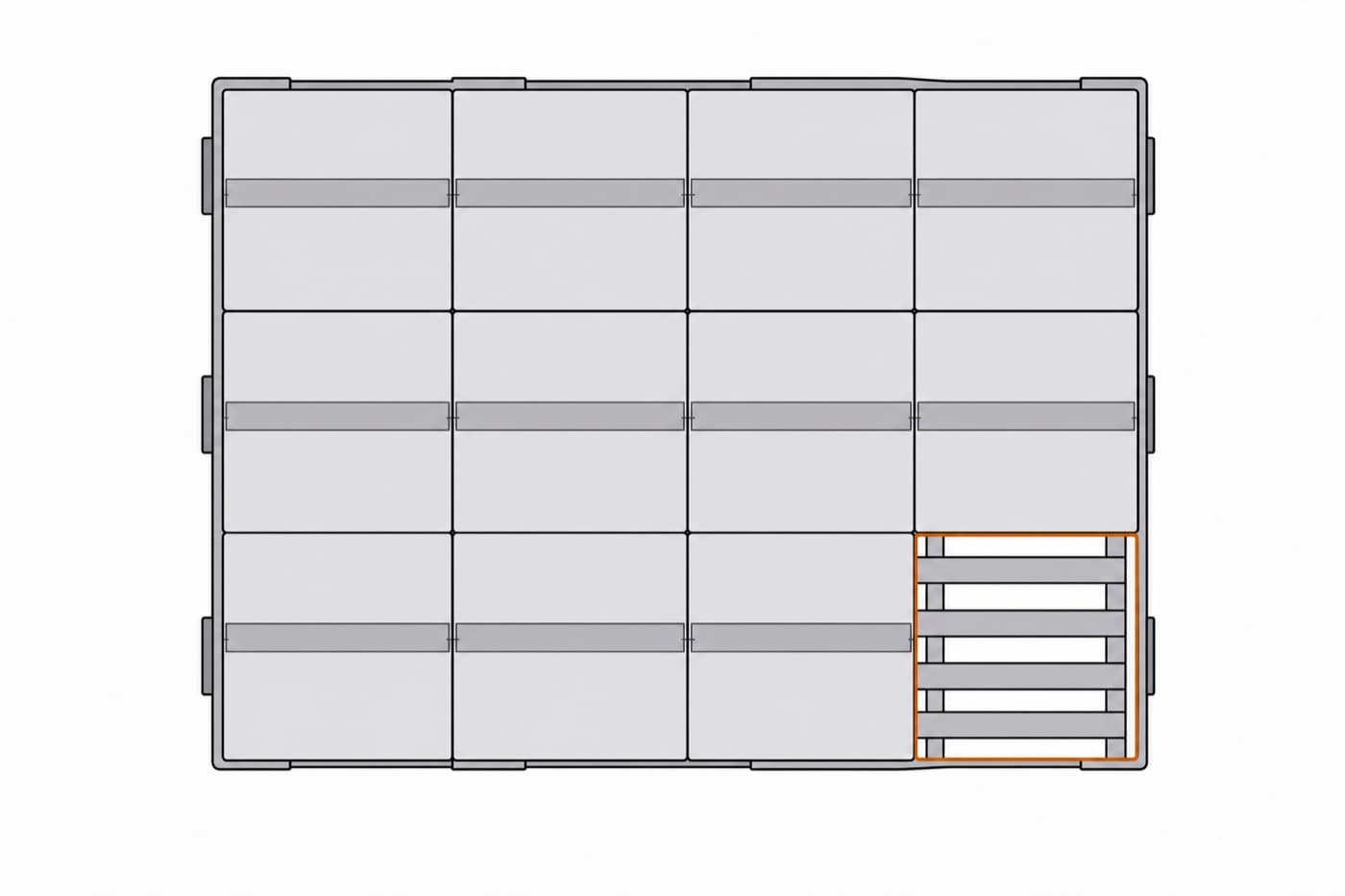
- 4Look at the top layer from above. It is the one built from whatever was left, so it is the one most likely to be short, and its shortage is invisible from the side.
- 5Compare against the order, not the slip. Get your own number first. The reasoning is in blind receiving.
Ask for the Ti-Hi
Cartons per layer and layers per pallet, Ti and Hi in the trade, are fixed for most products a supplier ships regularly. Ask once, write it on the order, and every future delivery becomes confirming a number rather than deriving one. It is a one line email that saves a minute a pallet forever.
The three patterns that break the arithmetic
| Pattern | What goes wrong | What to do |
|---|---|---|
| Column stacking versus interlocked | Interlocked layers rotate, so a layer read from one side gives a different count than the layer below it. | Count two adjacent layers separately. If they disagree, the pallet is interlocked and every layer needs its own read. |
| A void in the middle | Layers built around a hollow centre count correctly from every visible face and are short inside. | Press the top layer down at the centre. A void gives. Rare, and worth knowing about on anything valuable. |
| Mixed items on one pallet | Layer arithmetic assumes identical cartons. It does not survive a mixed load. | Do not use it. Break down and count by item, against the order. |
When to unwrap
- The top layer is incomplete. Something was made up, and what was made up may not have been made up correctly.
- The stack leans, bulges, or the layers do not line up.
- The wrap has been cut and re-applied, or the pattern of it changes partway up.
- The load is high value, or a shortage would stop a job.
- The supplier has been short before. Past behaviour is the best predictor you have, which is the argument for keeping a record of it.
Worth knowing
If you unwrap and find a shortage, stop and photograph it in place before removing anything further. A shortage discovered mid-unwrap and then fully dismantled is much harder to evidence than one photographed as found.
Questions people ask
- How do you count cartons on a wrapped pallet?
- Count the cartons in one complete layer, count the number of layers, and multiply. Then look at the top layer separately: it is the one most likely to be partial, and a partial top layer is invisible in the multiplication. Two people counting independently and comparing beats one person counting twice.
- What do Ti and Hi mean?
- Ti is the number of cartons in one layer, and Hi is the number of layers on the pallet. The two multiplied give the full pallet quantity. Suppliers who ship the same product regularly will usually tell you their Ti-Hi if asked, and it turns counting into confirming.
- Should I unwrap every pallet?
- No, and doing so would slow receiving to a halt for very little benefit on ordinary goods. Unwrap when the count does not resolve cleanly, when the load is high value, when the stack is uneven or the wrap looks re-applied, or when the top layer is incomplete.
- How do I count mixed pallets?
- Layer arithmetic does not work on a mixed pallet and pretending otherwise is how errors get in. Break it down and count by item, or count it against the packing slip line by line with the slip out of sight until you have your own number.
- Is it worth counting if the pallet is sealed by the supplier?
- Yes. A supplier seal tells you nobody opened it in transit; it says nothing about what was put in before it was sealed. Sealed pallets that are consistently correct are a reason to sample rather than to stop counting entirely.
DockCount does this job on a phone at the bay: count a delivery against the order it was placed on, photograph anything wrong, and the record writes itself. warehouse receiving software.