The receiving mistakes that cost the most, in order
Seven failures ranked by what they actually cost a small manufacturer, why each one survives, and the specific change that removes it.
In short
- The expensive mistakes are not carelessness. Every one of them is somebody being helpful under time pressure.
- The most costly is booking a delivery in as complete when it was not, because it makes the invoice match.
- Six of the seven are removed by the same change: make the record fall out of the count instead of following it.
Ranked by what they cost rather than by how often they happen, which produces a different order than most lists of this kind.
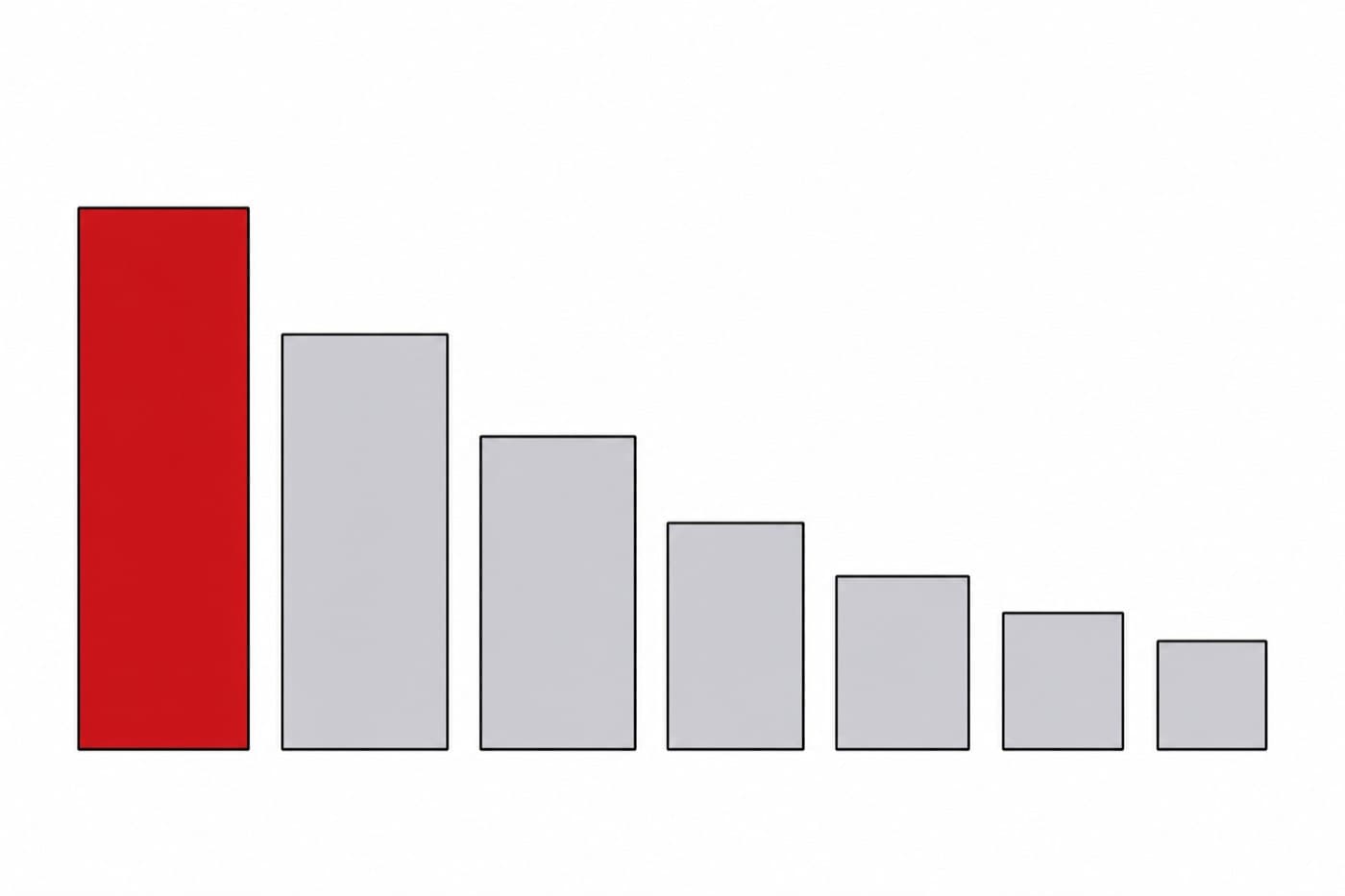
1. Booking it in as complete when it was not
The most expensive by a distance, and the most well intentioned. The order will not close, entering a partial receipt takes longer, and the missing six are probably coming. So the line gets closed at forty and the invoice for forty matches perfectly and gets paid.
Nothing downstream can catch this. Three-way matching passes. The auditor finds nothing. The only record that would have disagreed is the one that was adjusted to agree.
Put another way
The fix: the record has to be allowed to disagree with the order. If your system makes a partial receipt harder to enter than a full one, that is not a preference, it is a defect.
2. Signing clean on visible damage
Twenty seconds of writing, against a claim that is now materially harder to win. The driver is in a hurry, the damage looks minor, and the exception feels like an accusation. It is not one: it is a description.
The mechanics of what that signature does are in what signing commits you to.
3. Writing the record from memory, hours later
Quietly the worst, because it does not fail visibly. Records written at five o’clock say everything was fine, because that is what the end of a day feels like. The log stays full, the accuracy figure looks excellent, and every number in it is a reconstruction.
You cannot detect this from inside the data. The only signal is the gap between delivery time and record time, which is why dock-to-record time is worth tracking.
4. Counting against the packing slip
The most common of all. It feels exactly like counting and is not, because the number being confirmed was written by the supplier. It cannot detect a supplier who shipped what they meant to ship rather than what you ordered, which is the error the whole exercise exists to catch.
5. Putting disputed goods away
Tidiness working against you. Stock on the rack is stock in use, it cannot be recounted, and acting as though goods are yours can undermine a rejection you intended to make. Hold it, label it, and say so the same day.
6. Photographs that live in a phone
Taken diligently at the bay, never attached to anything, gone with the handset. Six weeks later the claim needs them and they are in a camera roll of eleven thousand images belonging to somebody who has left.
7. One person who knows how it works
Not a mistake so much as an accumulating risk. It runs perfectly until the week that person is away, at which point deliveries are signed for by whoever is nearest and the records for that week are unusable. Written procedure, second trained person: the one-page procedure exists for this.
What removes six of the seven
They share a shape. Each is a step that has to be remembered, done separately from the physical work, under time pressure, by somebody with something else to do. The fix is not more discipline or a longer procedure. It is making the record a by-product of counting rather than a task that follows it.
Questions people ask
- What is the most common receiving error?
- Counting against the packing slip instead of against the purchase order. It feels like counting, produces a tick against a number somebody else wrote, and cannot detect a supplier who shipped and billed what they meant to send rather than what you ordered.
- Why do people book deliveries in as complete when they are not?
- Almost always to keep a system tidy rather than to hide anything. An order that will not close is an irritation, a partial receipt takes longer to enter than a full one, and the assumption is that the rest will turn up. It is a well-intentioned habit with the worst possible consequence.
- How much does a bad receiving record actually cost?
- The direct cost is whatever you paid for goods you did not get. The larger cost is usually indirect: production stopped for a part everyone believed was in stock, a claim that failed for want of a photograph, and an annual price negotiation held with no evidence of a supplier's actual performance.
- Is it worth checking every delivery or should I sample?
- Check everything you can, and sample only where a supplier has a long record of accuracy and the goods are low value. Sampling decided by how busy the afternoon is is not sampling, it is guessing, and it produces records nobody can rely on because nobody knows which ones were checked.
- What is the single cheapest improvement to make?
- Photograph every delivery as it stands, before it is broken down. Thirty seconds, no training, no software, and it is the evidence that decides most disputes months later.
DockCount does this job on a phone at the bay: count a delivery against the order it was placed on, photograph anything wrong, and the record writes itself. receiving software for a small business.