Three-way matching, explained without the accounting
Three documents have to agree before an invoice gets paid. The one that stops fraud and mistakes is the one written at the loading bay.
The short answer
Three-way matching means checking the purchase order, the record of goods received and the supplier invoice against each other before payment. The order says what was agreed, the receiving record says what arrived, and the invoice says what is being charged. If all three agree the invoice is paid. If they do not, the difference is investigated first.
Written by Hamza Rivera, founder, dockcount. How these are checked.
Three-way matching sounds like an accounts process, and it is run by accounts, but two of the three documents are created before accounts ever sees them. One of those is made at the loading bay, which is why it is worth understanding out there.
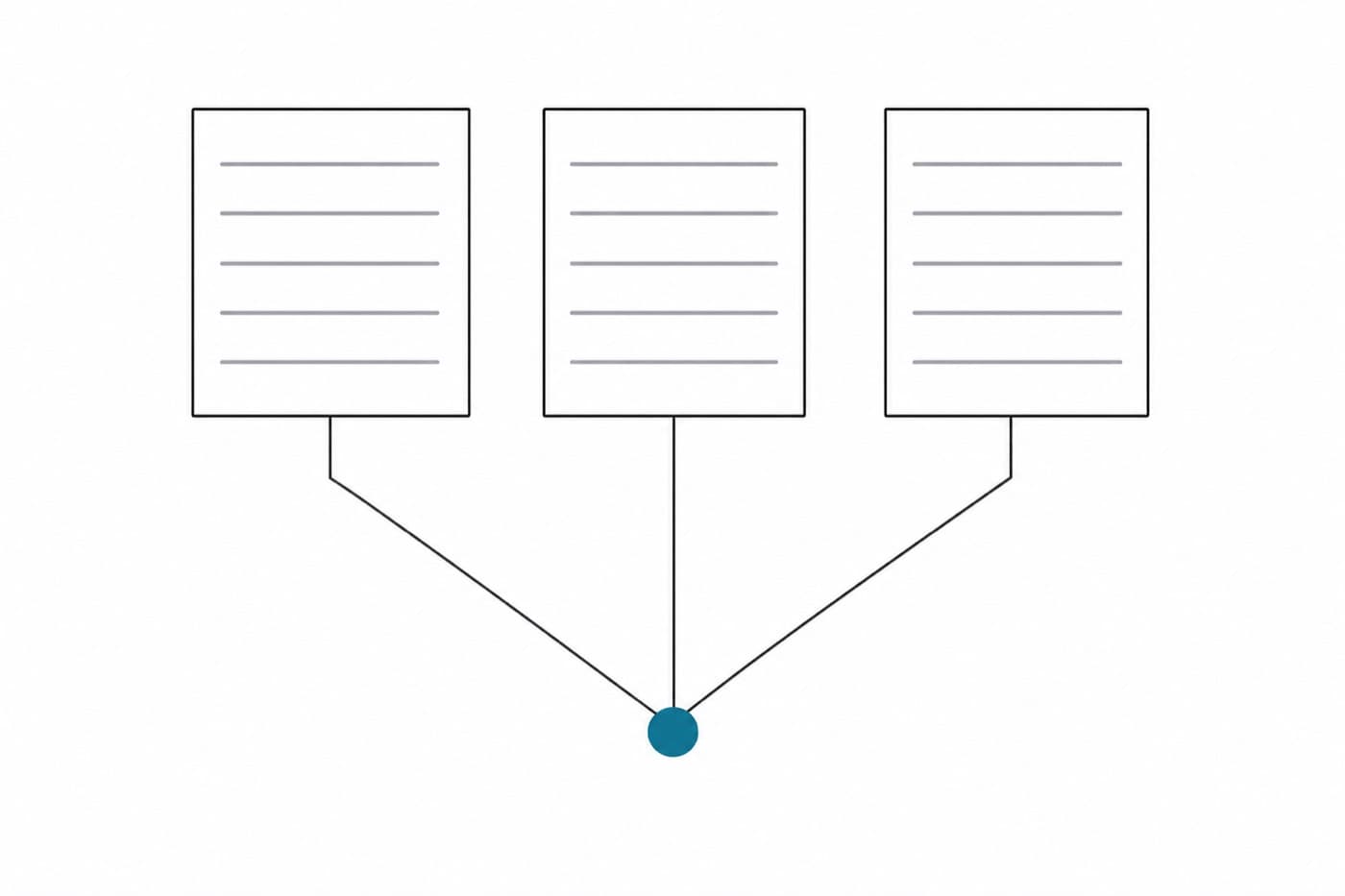
The three documents
| Document | Answers | Made by |
|---|---|---|
| Purchase order | What did we agree to buy, and at what price | You, before it ships |
| Goods received note | What actually turned up | Whoever received it, on the day |
| Invoice | What are we being charged | The supplier, afterwards |
Put another way
You order a taxi to the airport for thirty pounds. The order is the booking. The receipt the driver hands you when you actually arrive is the goods received note. The charge on your card is the invoice. If the card says fifty and the receipt says thirty, you want all three in front of you.
What each mismatch means
- Invoice against order, quantity: you are being billed for more than you asked for.
- Invoice against order, price: the rate charged is not the rate agreed.
- Invoice against receipt: you are being billed for goods that did not arrive. This is the one two-way matching cannot see.
- Order against receipt: the supplier sent something different from what was ordered, which is a purchasing problem rather than a payment one.
Two-way, three-way, four-way
Two-way matching compares the invoice to the order and skips receipt entirely. It is faster and it suits things with no pallet, such as services. On physical goods it is blind to the most expensive failure, which is paying for something nobody ever saw.
Four-way adds an inspection or quality record as a fourth document. It is used where goods have to pass a check before they count as received at all.
Worth knowing
Three-way matching is only as good as the middle document. If the receiving record is a signature on a delivery note, the match is really checking the invoice against the supplier’s own paperwork, which the supplier also wrote.
Why it fails in small companies
Not because nobody knows about it. Because the receiving record does not exist in a form anybody can match against. The order is in one system, the invoice is in another, and what arrived is on a clipboard in a drawer.
The fix is not more process at the accounts end. It is a record made at the bay that is specific enough to match against and findable weeks later.
DockCount does this job on a phone at the bay: count a delivery against the order it was placed on, photograph anything wrong, and the record writes itself. Shipping and receiving software that matches for you.