Receiving 101 · Freight
A liftgate charge should only ever surprise you once.
Accessorial charges get listed together and treated as one problem, and they are three. Some are permanent facts about your address, some are events on a single day, and some are facts about what you tendered. Each group is prevented, or argued, completely differently.
In short
- If your site has no dock it has no dock every time. That makes it a pricing question rather than an incident.
- A carrier must bill additional charges within 180 days of the original bill to have the right to collect them.
- You must contest a bill within 180 days of receiving it to keep the right to contest it.
- Ask for the authority first: a carrier must supply the rate, classification, rules and practices on request.
What they are, and who sets them
An accessorial charge pays for something beyond moving freight between two docks. The linehaul rate assumes a truck arrives at a dock, something takes the pallets off, and it leaves. Every way in which a real delivery differs from that has a charge attached to it.
They are set by the carrier’s tariff or by your agreement with them, not by any regulation. There is no national rate for a liftgate and there is no list of permitted charges, which is why the same delivery can attract different fees from two carriers and why nobody can tell you what yours should cost without reading your tariff.
What regulation does give you is the right to see that tariff. 49 U.S.C. § 13710(a)(1) requires a carrier to give the shipper, on request, a written or electronic copy of the rate, classification, rules and practices any rate applicable to the shipment is based on. That request is the first move in any dispute, and it is often the whole dispute.
Three groups, not one list
Most advice about accessorials lists them all together and comes down to “watch out for them”. That is not useful, because a liftgate fee and a detention fee have nothing in common except appearing on the same invoice. Grouped by what actually determines the charge, a list turns into a decision.
Facts about the address
Permanent, knowable in advance, and never a surprise more than once. If your site has one of these, it has it on every delivery, and it belongs on every quote and every bill of lading.
Liftgate
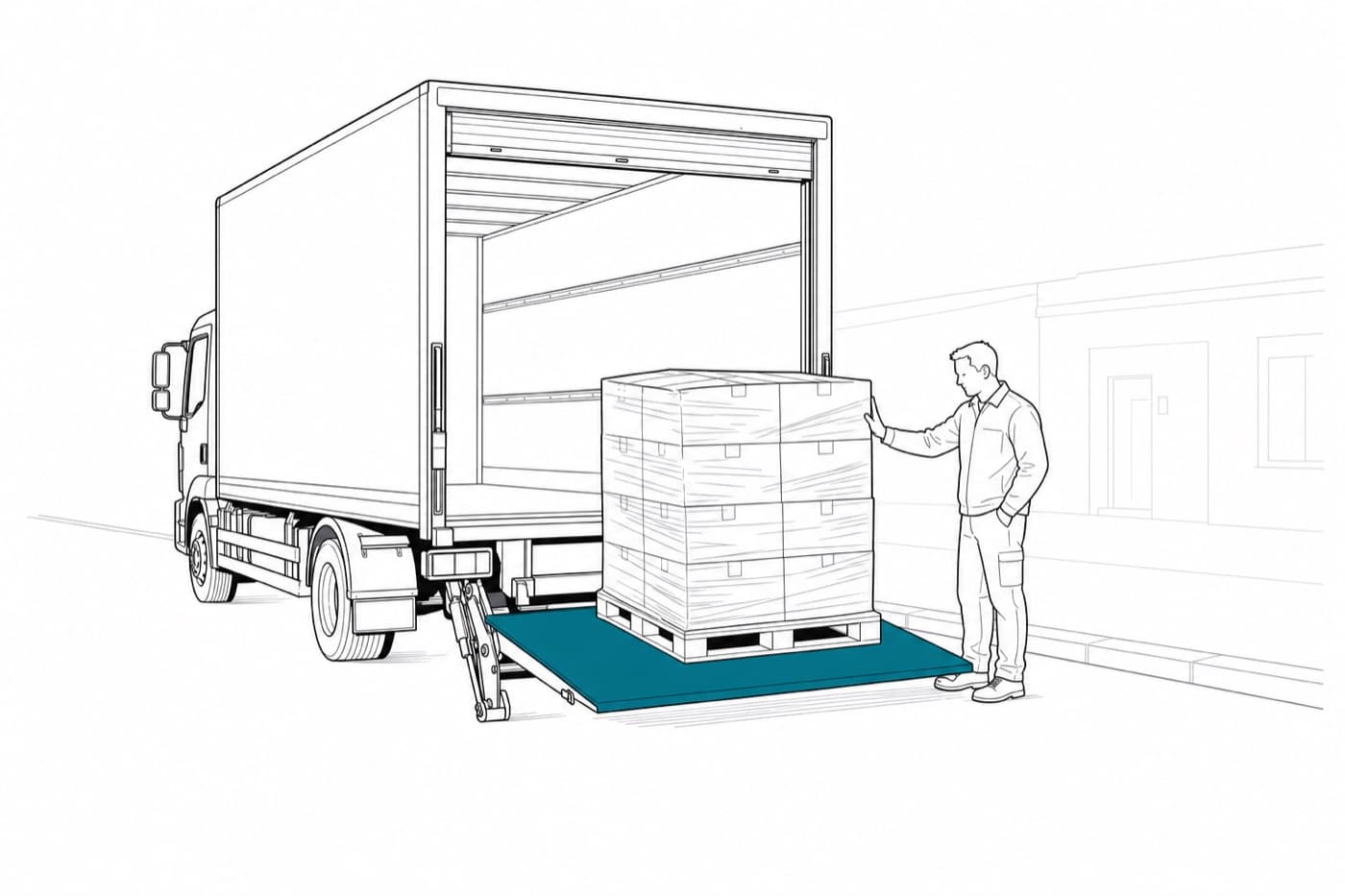
There is no dock, so the pallet has to be lowered to the ground mechanically.
Inside delivery
The goods go past the threshold rather than to the kerb.
Residential delivery
The address is classed as residential by the carrier, which can include a home business.
Limited access
Sites the carrier treats as awkward: schools, military bases, construction sites, some rural addresses.
Appointment or notification
The site requires the carrier to book in or to call before arriving.
Events on the day
Not knowable in advance, and largely decided by how the delivery goes. These are the ones where a record made at the time is the difference between a charge you can argue and one you cannot.
Detention
The vehicle waited beyond the free time the tariff allows.
Redelivery
Nobody could take the goods, so the carrier came back.
Reconsignment or diversion
The destination changed after the shipment was tendered.
Reweigh or re-measure
The carrier weighed or measured the freight and found it different from the bill of lading.
Sort and segregate
The carrier separated the load by item, order or store rather than handing over pallets.
Facts about the freight
Determined by what you tendered rather than by where it went. These are the ones a better measurement prevents.
Reclassification
The class on the bill of lading did not match what the carrier measured.
Overlength or oversize
A piece exceeds the length the tariff allows without a surcharge.
Excessive weight or single shipment
Thresholds in the tariff that a large shipment crosses.
Hazardous materials
The load required handling or documentation under the hazmat rules.
Protection from freezing
The load had to be kept above freezing in transit.
Deliberately no prices. Every one of these is set by a tariff or an agreement, and a figure quoted on a website is a figure from somebody else’s contract.
The first group is a pricing problem
This is the part worth acting on, because it is entirely within your control and almost nobody does it. If your delivery address has no dock, it has no dock on every delivery for as long as you are at that address. The liftgate is a permanent property of the site, and permanent properties belong in a price.
So it belongs on the quote request, on the routing instructions, and on the bill of lading, in the special instructions. Declared, it is rated. Undeclared, it is added afterwards at whatever the tariff says, and you find out when the invoice arrives. The same is true of inside delivery, of a residential classification, and of a site the carrier treats as limited access.
Two practical notes. Ask your carrier how they classify your address rather than assuming, because residential and limited access classifications are theirs to make and are sometimes surprising. And put the requirement on the order to your supplier too, since on an inbound delivery it is the supplier who tenders the freight and fills in the bill of lading.
The second group is a record problem
Detention, redelivery and reweigh charges are all assertions about what happened at a delivery. The carrier holds a record of it: an arrival time, a departure time, a driver’s note, a dimensioner reading. Most receivers hold nothing, which means the dispute is their evidence against your recollection, weeks later.
That asymmetry is the whole reason these charges are hard to argue, and it closes for nothing. Noting when the vehicle arrived and when it left, and photographing the load and the paperwork, takes a minute and is the only thing that makes a detention charge contestable.
Detention and demurrage are the two worth understanding properly rather than as a line in a list, and we wrote about the charges that start while nobody is watching separately.
The third group is a measurement problem
A reclassification is not really an accessorial, but it arrives in the same place on the same bill and it is the largest of the three groups by value. It happens when the class on the bill of lading does not match what the carrier measured, and the usual cause is a measurement that left the pallet out.
Six inches of pallet under a 40 inch load at 450 lb moves a shipment from an apparent class 92.5 to an actual class 100. We worked that through, and you can put your own figures into the freight class calculator before you tender rather than after you are re-rated.
The clocks
A hundred and eighty days, in both directions
49 U.S.C. § 13710(a)(3) sets a limit on each side, and both are far shorter than the eighteen months people usually have in mind.
A carrier must issue any bill for charges in addition to those originally billed within 180 days of your receipt of the original bill in order to have the right to collect them. An accessorial that appears eight months after the shipment is worth reading that subsection about before paying it.
And a shipper must contest the original bill or a subsequent bill within 180 days of receiving it in order to have the right to contest the charges. That is the one that catches people: a bill filed unexamined in January is not contestable in September, whatever the merits.
Once you are contesting, the procedure is in the freight bill audit page: a written claim to the carrier that collected the charges, the freight bill attached, and 60 days for them to pay, decline or settle in writing.
Questions
- What are accessorial charges?
- Charges for anything beyond moving freight between two docks: a liftgate because there is no dock, an inside delivery, waiting time, a second attempt after a failed delivery, a reweigh. The carrier's tariff or your agreement with them sets the amounts, so they vary between carriers and there is no published national rate for any of them.
- Why did I get charged for a liftgate?
- Because the delivery address had no dock and the driver had to lower the pallet mechanically. It is the most common surprise accessorial and also the most preventable, in a particular sense: it will never stop being true of that address. If your site needs a liftgate it needs one on every delivery, so it belongs on the quote and on the bill of lading rather than being discovered each time.
- Can I refuse to pay an accessorial charge?
- You can contest it, and there is a clock. Under 49 U.S.C. § 13710(a)(3)(B) a shipper must contest a bill within 180 days of receiving it to have the right to contest the charges. Start by asking for the authority: § 13710(a)(1) requires the carrier to give you, on request, a written or electronic copy of the rate, classification, rules and practices the charge is based on.
- How long does a carrier have to bill an accessorial they missed?
- 180 days from your receipt of the original bill. 49 U.S.C. § 13710(a)(3)(A) says a carrier must issue any bill for charges in addition to those originally billed within that window to have the right to collect them. A liftgate fee appearing eight months later is worth reading that section about.
- How do I stop getting accessorial charges?
- Separate the ones that are facts about your site from the ones that are events. The facts should be declared once, on every quote and every bill of lading, so they are rated rather than added. The events are reduced by having somebody ready to receive at the appointed time, unloading promptly, and recording what actually happened at the delivery, because that record is the only thing that lets you argue a detention or redelivery charge later.
- Is a fuel surcharge an accessorial charge?
- It is usually listed alongside them and it behaves differently. A fuel surcharge is a percentage or per-mile adjustment applied to the linehaul, moving with a published fuel index, rather than a fee for a service performed. It is worth checking that the index and the basis on your bill match your agreement, but it is not something a better-prepared delivery avoids.
- What is detention, and how is it different from demurrage?
- Detention is a charge for holding the carrier's vehicle or trailer beyond the free time allowed. Demurrage is the equivalent for equipment held at a port or rail terminal. Both start running while nobody is watching, which is why we wrote about them separately rather than as a line in a list.
- Do accessorial charges apply to parcel shipments?
- Parcel carriers have their own equivalents, usually called surcharges: residential, delivery area, additional handling, oversize. The vocabulary differs and the logic is the same, and so is the advice: the ones that are facts about the address should be priced in rather than discovered.
Sources
- 0149 U.S.C. § 13710: Concurrence and billing disputes · U.S. CodeSubsection (a)(1): a carrier must give the shipper, on request, a written or electronic copy of the rate, classification, rules and practices the rate is based on. Subsection (a)(3): a carrier must bill additional charges within 180 days of the original bill to have the right to collect them, and a shipper must contest a bill within 180 days of receiving it to have the right to contest it.
- 0249 CFR Part 378: Processing and disposition of overcharge claims · Electronic Code of Federal Regulations§ 378.3 requires a written claim to the carrier that collected the charges; § 378.8 gives that carrier 60 days to pay, decline or settle, with written reasons citing tariff authority if it declines.
- 0349 CFR § 373.101: Motor carrier bills of lading · Electronic Code of Federal RegulationsThe five items a bill of lading must contain. Special instructions are not among them, which is why the ones that prevent an accessorial have to be put there deliberately.
This describes how the rules generally work in the United States and links to the primary sources so you can read them yourself. It is not legal advice, and your contract with a supplier or carrier can change any of it. For money that matters, ask a lawyer.
Half of these charges are decided at the delivery and argued from whatever was written down there. DockCount records the delivery from a phone at the bay, with the time, the count against the order, and the photographs. Free for 25 deliveries a month.